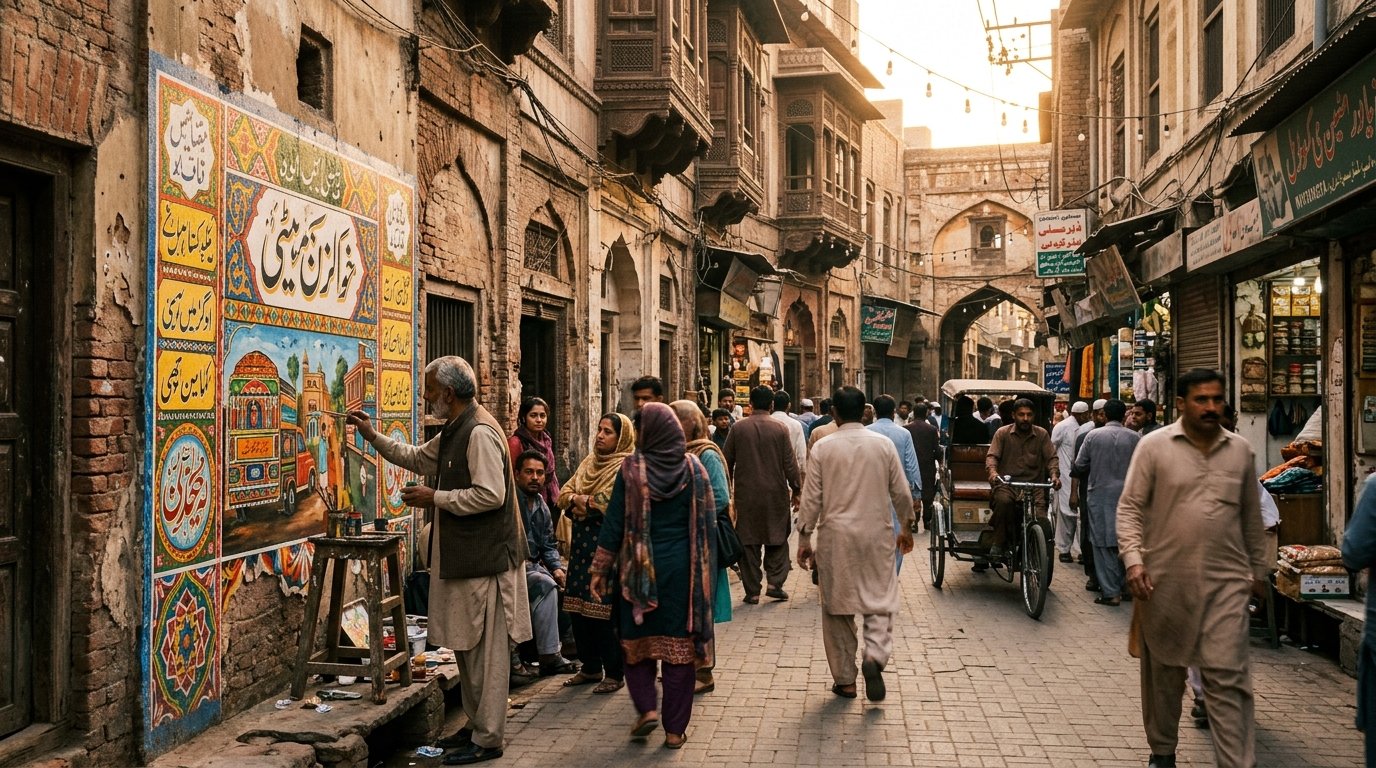
The first thing that surprises people is the scale. A finished miniature might sit in the palm of your hand, built up over weeks from single-hair brushes and pigment ground by hand.
The second surprise is the subject matter. Because Pakistani miniatures stopped being polite a long time ago.
A craft with a court behind it
Miniature painting arrived with the Mughals, who imported Persian masters and set them up in royal ateliers. The style was precise, courtly, and strictly coded — emperors on thrones, hunts, lovers in gardens, all rendered in jewel-like colour on paper called wasli.
It was never a folk art. It was a court technology, passed down through workshops for generations.
What broke the mould
Two things. First, the court that funded it disappeared. Second, a generation of students at the National College of Arts in Lahore decided the form didn’t have to stay in the past.
They kept the technique — the wasli, the gouache, the burnished gold — and swapped the content. Mughal emperors became generals. Garden scenes became scenes of war, cities, and violence. The frame stayed delicate; the message stopped being.
Neo-miniature goes global
The result was a movement now called neo-miniature, and it’s arguably Pakistan’s single most successful cultural export. Artists trained in this tradition show in London, New York and Dubai, and their work commands serious prices.
Imran Qureshi turned a courtroom floor into a blood-red miniature garden. Shahzia Sikander reimagined the whole grammar of the form. Both are now major international figures.
Why collectors care
Miniature rewards looking. Every square centimetre holds a decision — a decision that took hours. That density of labour is exactly what the contemporary art market is hungry for right now, in an era of fast, screen-made images.
It also travels well. A miniature doesn’t need a huge wall. It needs a magnifying glass and patience.
Where the form is now
Students still train in the old techniques, but they push them in every direction — political, personal, feminist, digital. The discipline has never been healthier.
For a proper overview of who’s working in the medium today, PakistaniArt maintains a miniature section covering Pakistani miniature painting and its key figures. It’s a good place to start before you ever pick up a brush — or a cheque.