
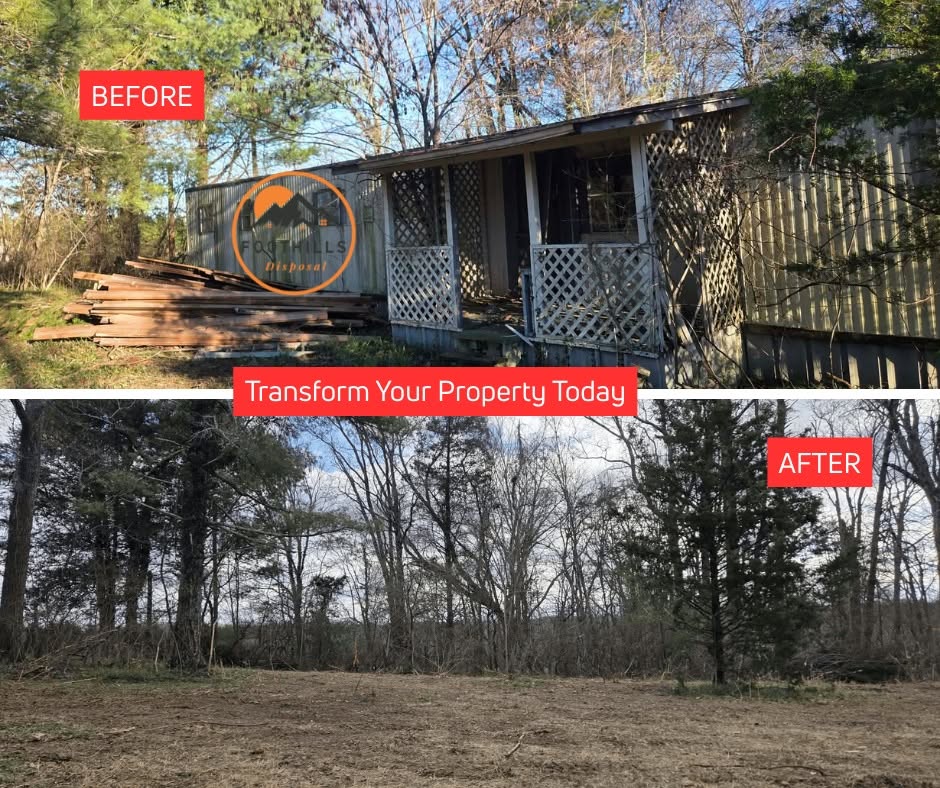
Every structure built before 1980 carries a hidden inventory. Behind the walls, above the ceilings, beneath the floors, and embedded in the mechanical systems lie materials that were standard construction practice at the time they were installed but that we now understand to pose serious health risks when disturbed. Asbestos, lead-based paint, polychlorinated biphenyls, and other hazardous substances were incorporated into buildings during the mid-twentieth century at a scale that is easy to underestimate until you begin planning their demolition.
The regulatory framework governing hazardous materials in demolition is among the most complex in the construction industry — layered across federal agencies, state environmental programs, and local jurisdictions. For property owners, developers, and contractors approaching the demolition of older structures, understanding this framework is not optional. Federal law mandates specific procedures for identifying and managing these materials before demolition begins. Violations carry significant penalties, create genuine environmental and public health harm, and — in some cases — expose individual project participants to criminal liability.
This guide walks through the hazardous materials most commonly encountered in pre-1980 structural demolition, the regulatory requirements that govern their management, and the practical steps that bring a demolition project into compliance before work begins.
The Hazardous Materials Landscape in Older Structures
Asbestos: The Primary Concern
Asbestos was one of the most widely used building materials of the twentieth century, prized for its heat resistance, tensile strength, and sound-dampening properties. By the time its carcinogenic effects were sufficiently established to drive regulatory action in the late 1970s and early 1980s, it had been incorporated into an extraordinary range of building products.
The EPA banned most asbestos-containing products in new construction between 1973 and 1989, but the long tail of earlier construction means that virtually every structure built before 1975 contains asbestos-containing materials in some form, and structures built through the early 1980s may contain them in specific applications.
Common asbestos-containing materials in pre-1980 structures:
- Floor tiles and adhesive mastic.Nine-inch and twelve-inch resilient floor tiles from the 1940s through the 1970s commonly contain chrysotile asbestos. The black mastic adhesive used beneath many of these tiles also frequently contains asbestos.
- Ceiling tiles.Acoustical ceiling tiles from this era frequently contain asbestos fiber as a fire-resistance and dimensional stability additive.
- Textured ceiling coatings.Spray-applied and trowel-applied textured ceiling finishes — commonly called “popcorn ceilings” — applied before 1978 commonly contain asbestos.
- Thermal pipe and duct insulation.Mechanical insulation — the material wrapped around heating pipes, steam pipes, and HVAC ducts — is among the most common and most hazardous asbestos-containing materials in older buildings.
- Spray-applied fireproofing on structural steel.In commercial and industrial buildings, structural steel members were frequently protected from fire with spray-applied materials containing asbestos.
- Roofing materials.Asbestos-cement roofing shingles, roofing felt, and built-up roofing systems from this era frequently contain asbestos.
- Drywall joint compound.Pre-1977 joint compounds commonly contained tremolite or chrysotile asbestos as a thickening agent.
- Exterior siding panels.Transite — an asbestos-cement composite — was widely used as an exterior building panel and as soffit material.
The critical point for demolition planning is that asbestos-containing materials are not identifiable by visual inspection. A floor tile that looks identical to a non-asbestos tile may contain 20 percent chrysotile asbestos. Laboratory analysis of samples collected by a certified inspector is the only reliable method of identification.
Lead-Based Paint
The use of lead in architectural paint was restricted beginning in 1978, but structures built before that year — and particularly those built before the 1950s, when lead content in paint was at its highest — may have multiple layers of lead-containing paint beneath surface coatings that were applied later.
Lead-based paint in intact, well-adhered condition is a management concern rather than an immediate hazard. Demolition changes this equation fundamentally. The cutting, grinding, sandblasting, and impact associated with demolition activities generates lead-laden dust and debris that creates significant exposure risk for workers and, if not properly contained, for the surrounding community.
Federal OSHA’s Lead in Construction Standard (29 CFR 1926.62) establishes a comprehensive framework for worker protection when construction activities disturb lead-containing materials. This includes initial exposure determination, air monitoring, worker training and medical surveillance, hygiene facilities, and specific engineering controls. The standard applies when lead in construction materials above the specified trigger level is being disturbed — which covers virtually all demolition activity on pre-1978 structures.
Polychlorinated Biphenyls (PCBs)
PCBs were banned from new use in 1979 under the Toxic Substances Control Act, but their long service life means they remain present in many older commercial and industrial buildings.
Fluorescent light ballasts. The most common PCB-containing item encountered in commercial building demolition is the fluorescent light ballast. Ballasts manufactured before 1979 may contain a PCB-based dielectric fluid. These ballasts, which may still be in service in older commercial buildings or may be found stored or in fixtures being removed during interior demolition, are regulated materials under TSCA and must be disposed of through appropriate channels.
Caulking compounds. PCB-containing caulking was used in commercial construction for window glazing and expansion joints from the 1950s through the 1970s. Unlike other PCB applications, PCB caulk can leach into adjacent porous materials — concrete, brick, and wood — creating a more extensive remediation challenge than simply removing the caulk itself.
Transformers and hydraulic equipment. Older electrical transformers and some hydraulic equipment may contain PCB-contaminated oils. These require hazardous waste management rather than standard demolition debris disposal.
Mercury-Containing Devices
Older buildings contain a range of devices with mercury components: thermostats (particularly older pneumatic and electromechanical models), fluorescent and high-intensity discharge lighting, and some older switches and relays. Mercury is a potent neurotoxin, and its release through careless demolition creates both worker exposure risk and potential environmental contamination. Mercury-containing devices require identification and removal before general demolition proceeds.
The Federal Regulatory Framework
Understanding the regulatory landscape for hazardous materials in demolition requires navigating multiple overlapping frameworks.
EPA NESHAP Regulations for Asbestos
The National Emission Standards for Hazardous Air Pollutants (NESHAP), specifically the Asbestos NESHAP (40 CFR Part 61, Subpart M), is the primary federal regulation governing asbestos in demolition. Its requirements for regulated demolition projects — those demolishing structures above specified size thresholds — include:
Pre-demolition inspection. A certified asbestos inspector must survey the structure and identify all regulated asbestos-containing materials (RACM) before demolition begins. This inspection must be completed regardless of the age of the building — the NESHAP does not provide an exemption for newer buildings or buildings where the owner believes asbestos is absent.
Notification to the regulatory authority. At least 10 working days before demolition begins (or immediately if the project is an emergency demolition), written notification must be submitted to the delegated regulatory authority — typically the state environmental agency.
Removal and disposal. All RACM must be removed from the structure before demolition begins if the demolition would disturb or fracture that material. Removal must be performed by licensed abatement contractors using specified work practices. Removed asbestos-containing materials must be properly packaged, labeled, and disposed of at an approved facility.
Waste manifesting. Asbestos waste shipments must be accompanied by documentation — typically a waste manifest — that tracks the material from the point of generation to the disposal facility. This cradle-to-grave tracking system ensures accountability for asbestos waste management.
OSHA Standards for Worker Protection
While the EPA’s NESHAP addresses asbestos from an environmental perspective, OSHA’s asbestos construction standard (29 CFR 1926.1101) addresses worker protection during asbestos work. These two frameworks overlap but are not identical — a project that is compliant with EPA requirements may still fail to meet OSHA requirements for worker protection.
The OSHA asbestos standard establishes permissible exposure limits, requires air monitoring, mandates specific engineering controls and respiratory protection, requires medical surveillance for exposed workers, and imposes training requirements on workers who perform asbestos work.
State Environmental Programs
Many states have adopted asbestos regulations that are more stringent than the federal NESHAP — applying to smaller projects, requiring notification in more circumstances, and imposing higher abatement standards. State programs are administered by the relevant state environmental agency, which may have delegated authority under the federal program.
For any demolition project, understanding the specific requirements of the state where the project is located — not just the federal requirements — is essential. A project that meets federal minimums may still be in violation of state law.
The Abatement Process: From Inspection to Clearance
The sequence of activities that brings a demolition project into compliance with hazardous material requirements follows a well-defined structure.
Phase 1: Inspection and Sampling
A certified asbestos inspector conducts a systematic inspection of all accessible materials in the structure, collecting samples of suspect materials for laboratory analysis. The number and location of samples are governed by EPA guidance — a single-point sample of a homogenous material area is generally accepted for non-friable materials, while friable materials may require more extensive sampling.
Laboratory analysis by an accredited laboratory produces quantified results — the percentage of asbestos by type in each sampled material. Materials above the one-percent threshold are classified as asbestos-containing materials and subject to regulation.
Phase 2: Abatement Design and Contractor Selection
Based on the inspection report, an abatement scope is developed that identifies every regulated material requiring removal and the work practices appropriate for each. Licensed abatement contractors bid on this scope, and work must be performed only by contractors licensed under the applicable state program.
Before structural demolition work can officially begin, asbestos and lead paint require strict environmental containment protocols — from physical isolation of the work area with negative pressure enclosures to the final air clearance testing that confirms the area is safe for re-occupancy or general demolition.
Phase 3: Abatement Execution
Asbestos abatement work is performed under controlled conditions designed to prevent fiber release into the surrounding environment. For friable materials — those that can be crumbled by hand pressure — this typically involves:
- Establishing a negative pressure enclosure using polyethylene sheeting and HEPA-filtered exhaust fans that create air pressure below the surrounding environment, preventing fiber migration
- Wetting materials before and during removal to minimize fiber release
- Placing removed materials in labeled, sealed disposal bags within the enclosure
- Decontaminating workers through a multi-stage decontamination unit before leaving the work area
For non-friable materials in good condition, less intensive work practices may be appropriate, but any work practice that disturbs a non-friable material to the point of breaking it into smaller pieces escalates the required controls.
Phase 4: Air Clearance Testing
After abatement is complete and before the enclosure is removed, air sampling is performed to confirm that airborne fiber concentrations have returned to acceptable levels. This clearance testing — performed by a certified industrial hygienist or air monitoring specialist — is the objective verification that the abatement was effective and the work area is ready for subsequent construction activities.
Phase 5: Waste Disposal and Documentation
Asbestos waste is transported to approved disposal facilities — not standard C&D waste facilities, which are not authorized to accept asbestos-containing materials. The chain of custody for asbestos waste must be documented from generation through disposal. Maintaining this documentation is a regulatory requirement and provides evidence of compliance in the event of a regulatory inquiry.
Common Compliance Failures and Their Consequences
Understanding the most frequent hazardous material compliance failures in demolition helps contractors and property owners avoid them.
Assuming absence without testing. The most common compliance failure is proceeding with demolition on a pre-1980 structure without completing the required inspection and testing. “We checked and didn’t think there was any asbestos” is not a defense that holds up under regulatory scrutiny. The inspection requirement is objective — it either was done or it was not.
Using unlicensed abatement contractors. Asbestos abatement must be performed by licensed contractors under all state programs. Using unlicensed workers for cost savings creates regulatory exposure for both the contractor and the property owner.
Inadequate waste management. Asbestos waste that is not properly packaged, labeled, manifested, and disposed of at a licensed facility creates regulatory violations and potential environmental liability.
Overlooking PCB caulk. PCB-containing caulking is frequently missed in pre-demolition assessments because it is not as well-known as asbestos and requires specific testing to identify. Buildings with PCB caulk can require extensive remediation if the caulk has contaminated adjacent materials.
Conclusion
The hazardous materials legacy of mid-twentieth century construction is a real and legally significant feature of pre-1980 structural demolition. Managing it correctly — with thorough pre-demolition inspection, licensed abatement for regulated materials, compliant waste management, and proper documentation — is not a bureaucratic obstacle to efficient demolition. It is the foundation of safe demolition practice.
Projects that approach hazardous material management as a core technical requirement rather than a compliance burden to minimize consistently produce better outcomes: safer work environments, cleaner sites, and documentation that protects all project participants from future regulatory and liability exposure.