
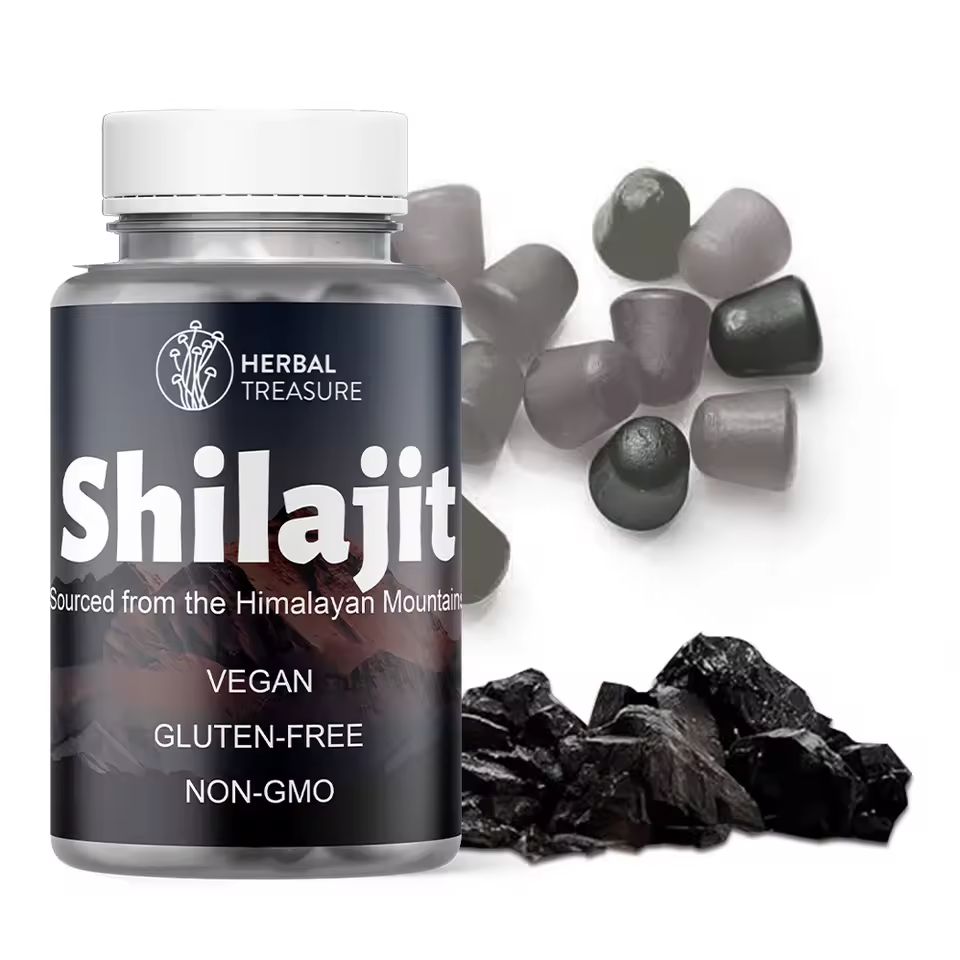
Finding a Shilajit brand you can trust is not always straightforward. As interest in traditional wellness ingredients continues to grow, consumers can now choose from numerous products, including resin, powder, capsules, and Shilajit gummies. While having more choices can be convenient, it also makes it important to understand what separates a thoughtfully prepared product from one supported mainly by marketing claims.
For anyone researching Chitral House, the first step is to understand what makes a Shilajit brand worth considering. Origin, processing, ingredients, quality control, packaging, labeling, and transparent communication can all help consumers make a more informed decision.
Chitral House is associated with the Chitral region of Pakistan, giving the brand a geographic connection that may appeal to people looking for Shilajit from a mountainous region. However, origin alone should not be treated as proof of purity or quality. A complete evaluation requires looking at the actual product and the information provided about it.
What Makes a Shilajit Brand Trustworthy?
Trust in a supplement brand is built through information and consistency rather than a single claim.
A consumer evaluating a Shilajit brand should consider several practical questions:
- Is the source of the raw material clearly described?
- Are ingredients disclosed?
- Is information about processing or purification available?
- Are appropriate quality-control measures discussed?
- Is the serving size clearly stated?
- Does the packaging provide storage guidance?
- Does the brand avoid exaggerated health promises?
These questions can help consumers distinguish between a brand that provides useful product information and one that relies mainly on promotional language.
Why Does Shilajit Sourcing Matter?
Shilajit is a naturally occurring substance associated with mountainous regions of South and Central Asia. Its characteristics can vary depending on environmental conditions, collection practices, processing, and storage.
Chitral House is connected with the Chitral region of northern Pakistan. For consumers interested in Shilajit associated with this area, the geographic origin may be an important part of their research.
However, geographical origin should be considered alongside quality practices. A product can have a credible source but still require appropriate processing, purification, and testing before it reaches the consumer.
This is why responsible buyers should ask not only “Where does it come from?” but also “How was it prepared and evaluated?”
Does Natural Mean Pure?
Not necessarily.
The terms “natural” and “pure” are frequently used in supplement marketing, but they do not provide enough information by themselves to establish quality.
A naturally collected material can contain substances that need to be managed through appropriate processing. Environmental contaminants can also become a concern depending on where and how a natural substance is collected.
For this reason, buyers should look beyond broad labels and investigate the product’s actual ingredient information, processing approach, and quality documentation where available.
Why Is Shilajit Processing Important?
Raw Shilajit collected from the environment is not necessarily the same as a finished consumer supplement.
Processing and purification can be important for preparing Shilajit for use. Quality-focused processing should aim to produce a product with appropriate consistency while addressing unwanted materials that may be present in naturally collected raw material.
Consumers should therefore look for useful information about how a brand handles its raw material.
A lack of processing information does not automatically prove that a product is poor quality, but transparent information gives consumers more context when comparing products.
What Should You Know About Shilajit Gummies?
Traditional Shilajit is often associated with resin, but modern consumers can find the ingredient in several formats. Shilajit gummies are one option designed for people who prefer a convenient chewable format.
Gummies can be practical for travel and may be easier to incorporate into a daily routine than products that require measuring resin.
However, convenience should not be confused with quality.
When evaluating Shilajit gummies, consumers should check the complete ingredient list and determine how much Shilajit or Shilajit-derived ingredient is provided per serving.
It is also important to consider added ingredients such as sweeteners, flavoring agents, or other components used to create the gummy’s texture and taste.
Are Shilajit Gummies a Good Alternative to Resin?
The answer depends on individual preferences and the specific product.
Shilajit resin is a traditional format and generally requires careful measuring and storage. Gummies are pre-formulated and may offer greater convenience.
However, they are not compositionally identical. Gummies may contain additional ingredients, and the amount of Shilajit per serving can vary between products.
Therefore, consumers should compare actual labels rather than assuming that one format is inherently more authentic or effective.
For someone who values portability and convenience, gummies may be appealing. Someone who prefers a traditional format may prefer resin. The quality of the individual product remains an important consideration in either case.
What Should You Check Before Buying Shilajit Online?
Online shopping makes it easy to compare brands, but consumers should take a few minutes to evaluate product information before ordering.
Check the Ingredient List
The ingredient list should be easy to find and understand. This is especially important when purchasing formulated products such as gummies.
Review the Serving Information
Look at the recommended serving and the amount of Shilajit or relevant extract provided per serving.
Look for Processing Information
A brand that explains its approach to processing and purification provides consumers with additional context.
Consider Quality Testing
Quality testing can be useful for naturally sourced products. Depending on the product, relevant assessments may include testing for heavy metals, microbial contamination, and other quality characteristics.
Review Storage Instructions
Proper storage can help maintain product quality. Follow the manufacturer’s instructions regarding temperature, moisture, light, and other storage conditions.
Evaluate Health Claims
Be cautious about claims that promise guaranteed results, instant transformations, disease treatment, or replacement of medical care.
What Can Make Chitral House Relevant to Buyers?
Consumers interested in Shilajit connected with the Chitral region may naturally encounter Chitral House while researching potential brands.
The brand’s connection to Chitral can be relevant to consumers who value geographic sourcing. However, a responsible evaluation should also consider product-specific details.
A useful way to approach the decision is to separate three questions:
- Where does the Shilajit come from?
- How is it processed and presented as a finished product?
- What information is available to help evaluate its quality?
Answering all three questions provides a more complete picture than relying on geographic identity alone.
How Does E-E-A-T Apply to Shilajit Brands?
E-E-A-T stands for Experience, Expertise, Authoritativeness, and Trustworthiness. These principles are particularly relevant when consumers search for health and wellness products online.
Trustworthy Shilajit information should clearly distinguish traditional use from modern scientific evidence. It should avoid presenting preliminary research as established medical fact.
For a brand, trust can also be supported through clear product information, responsible communication, transparent labeling, and realistic expectations.
Consumers should be especially cautious of content that uses scientific terminology to create an impression of certainty without explaining the limitations of the underlying evidence.
Relevant Case Study: A Consumer Comparing Shilajit Brands
Consider this illustrative case study.
A hypothetical buyer named Usman wanted to explore Shilajit as part of his interest in traditional wellness products. He initially searched online and found numerous brands offering resin, capsules, powders, and Shilajit gummies.
At first, Usman focused on price and customer-facing claims. However, he quickly noticed that different brands provided very different levels of product information.
He created a simple comparison checklist.
First, he checked the stated origin. Then he reviewed the ingredient lists and serving sizes. For gummy products, he specifically checked how much Shilajit was included and what other ingredients were present.
Next, he looked for information about processing and quality control. He also checked storage instructions and avoided products that promised guaranteed medical outcomes.
While researching Chitral House, Usman considered its connection with the Chitral region but understood that geographic origin alone could not establish purity.
This hypothetical example demonstrates a practical lesson: consumers can make more informed choices when they compare evidence and product information rather than relying on a single marketing claim.
Can Shilajit Be Used by Everyone?
No supplement should automatically be considered suitable for everyone.
People with medical conditions, those taking prescription medications, and people who are pregnant or breastfeeding should consult a qualified healthcare professional before using Shilajit.
Consumers should also follow the serving instructions provided for the particular product.
Because different Shilajit products can vary in composition and concentration, advice should be based on the actual product rather than assumptions about the ingredient category as a whole.
Common Mistakes When Choosing a Shilajit Brand
Consumers can avoid several common mistakes by taking a more methodical approach.
Choosing Only by Price
A low price does not prove poor quality, just as a high price does not prove superior quality.
Assuming Darker Means Better
Color and texture are not reliable standalone indicators of purity.
Ignoring Additional Ingredients
This is particularly important when purchasing Shilajit gummies, capsules, or other formulated products.
Relying on Geographic Claims Alone
Mountain or Himalayan origin can be relevant, but it does not replace quality controls.
Expecting Guaranteed Results
Individual responses vary, and scientific evidence surrounding Shilajit remains developing. Responsible product information should avoid guarantees.
How Can Buyers Make a More Informed Choice?
A practical checklist can simplify the process:
- Research the stated source.
- Read the complete ingredient list.
- Check the amount per serving.
- Review processing or purification information.
- Look for available quality-control information.
- Examine packaging and storage guidance.
- Avoid unsupported medical claims.
- Compare products based on actual information rather than appearance alone.
- Seek professional advice when health conditions or medications are involved.
This approach can help buyers evaluate Chitral House or any other Shilajit brand more objectively.
Conclusion
Finding a trusted Shilajit brand requires more than choosing the product with the most attractive packaging or strongest marketing claims. Consumers should consider sourcing, processing, ingredients, quality control, labeling, packaging, and realistic communication.
Chitral House’s connection with the Chitral region of Pakistan may be relevant for consumers specifically interested in Shilajit associated with that area. However, geographic origin should be considered alongside product-specific quality information.
For consumers considering Shilajit gummies, convenience can be an important advantage, but the same principles apply. Check the ingredients, serving information, Shilajit content, processing details, and available quality documentation before making a purchase.
Ultimately, a trustworthy purchasing decision begins with asking the right questions and choosing products based on transparent, understandable information.
FAQs
What should I look for in a trusted Shilajit brand?
Look for clear sourcing information, transparent ingredient labeling, appropriate processing or purification information, quality-control details where available, proper packaging, serving guidance, and realistic product claims.
Is Chitral House a Shilajit brand?
Chitral House is associated with Shilajit from the Chitral region of Pakistan. Consumers should review the information provided for the specific product they are considering.
Does Chitral origin guarantee Shilajit purity?
No. Geographic origin alone does not establish purity. Processing, purification, testing, handling, and storage are also important considerations.
What are Shilajit gummies?
Shilajit gummies are chewable supplement products formulated with Shilajit or a Shilajit-derived ingredient. Their ingredients and Shilajit content can vary between products.
Are Shilajit gummies better than resin?
Neither format is universally better. Gummies emphasize convenience, while resin is a traditional format. Consumers should compare the specific products, ingredients, serving sizes, and quality information.
How can I check the quality of Shilajit?
Review sourcing information, ingredients, processing details, quality-testing information where available, packaging, and serving instructions. Appearance alone cannot reliably establish purity.
Can Shilajit be tested for contaminants?
Yes. Laboratory quality testing can assess potential contaminants and other characteristics, depending on the testing program and product.
Is Shilajit scientifically proven to provide specific health benefits?
Research has examined Shilajit and its compounds, but evidence remains developing. Traditional use and preliminary findings should not be presented as guaranteed medical benefits.
Who should consult a doctor before using Shilajit?
People with medical conditions, those taking medications, and people who are pregnant or breastfeeding should consult a qualified healthcare professional before using Shilajit.
What is the safest way to choose Shilajit online?
Use a product-information-first approach. Check the source, ingredients, serving information, processing, quality documentation, packaging, and seller transparency, and avoid products making unrealistic promises.