Introduction: Why Your Logo Keeps Looking Like a Hot Mess on Fabric
So you have a slick logo. It looks sharp on your website, crisp on your business card, and clean on your letterhead. But the moment you stitch it onto a hat or polo shirt? Total disaster. Thread breaks, gaps, puckered fabric, and letters that look like they melted in the sun. The problem almost always comes down to one thing: you skipped the real conversion process. You cannot just drop a JPG into embroidery software and pray. To get professional, shop-quality results, you need to Convert Logo to BAi Embroidery File the right way. BAi (short for Bernina Artista) is a powerful embroidery format, but it doesn’t magically fix bad artwork. This guide walks you through exactly how to do it, step by step, using a human-friendly, no-nonsense approach.
What Exactly is a BAi Embroidery File Anyway?
Before we dig in, let’s get clear on BAi. This format comes from Bernina’s embroidery software and machines. Unlike a normal picture file (JPEG, PNG, or SVG), a BAi file contains stitch-by-stitch data. This means every needle puncture, thread color change, and stitch direction is mapped out. Think of it as a roadmap for your embroidery machine. If the roadmap is wrong, the machine gets lost. BAi files are great for home and semi-professional machines because they preserve density and underlay stitches better than some generic formats like DST or PES. But again, garbage in, garbage out. You need a clean, digitized logo first.
Step 1: Start With a Clean Logo File – No Exceptions
Do not skip this. Even the best digitizer cannot save a pixelated, low-res mess. Pull up your logo in a vector editing tool like Adobe Illustrator, Inkscape (free), or CorelDRAW. You want a vector file (like .ai, .eps, or .svg). Vectors use math, not pixels, so they scale without blurring. If all you have is a small JPEG, try tracing it manually or using a vector tracing tool. Clean up stray points, merge overlapping shapes, and simplify tiny details. Embroidery hates tiny text below 0.25 inches. If your logo has a 4pt font, either enlarge it or drop it. Real talk: a needle and thread cannot sew what a laser printer can print.
Action step: Export your cleaned-up vector as a high-contrast PNG at 300 DPI. Keep the background transparent. Use only 1-4 colors max for best results.
Step 2: Choose Your Digitizing Weapon – Software Matters
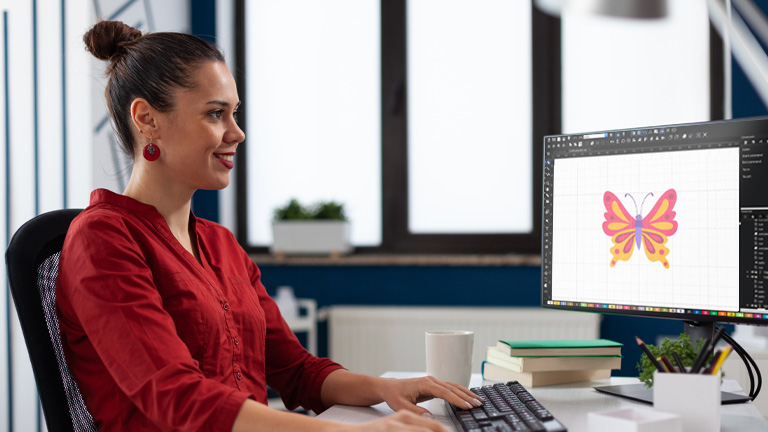
You need embroidery digitizing software to convert your artwork into stitches. Here are your options:
For beginners: InkStitch (free plugin for Inkscape) or Embrilliance Essentials. Both let you manually place stitch types and run auto-digitizing. Auto-digitizing is tempting but often produces messy results for complex logos.
For pros: Hatch (affordable for small business), Wilcom, or Bernina’s own Artista software. These give you full control over stitch angles, pull compensation, and underlay.
If you don’t want to learn software, hire a digitizer. Seriously. A good digitizer charges 10−20 per logo. You send the vector, they send back a BAi file ready to sew. For one-off projects, this saves hours of frustration. But if you plan to stitch multiple products, learning the basics is worth it.
Step 3: Manual Digitizing Walkthrough – How to Set Stitches Like a Pro
Let’s assume you are using Hatch or Wilcom. You have your logo imported. Now follow these exact steps:
First, set your hoop size and fabric type. A thick puffy cap needs different underlay than a thin dress shirt. For caps, add more underlay and use a shorter stitch length. For knits, use a stabilizer and reduce density.
Second, break your logo into stitch regions. Each color block or shape should be its own object. Do not treat the whole logo as one giant fill. Separate the background circle, the text, and the icon into different segments.
Third, choose the right stitch type:
-
Satin stitches: For borders, letters, and thin lines (width under 6mm).
-
Tatami fill stitches: For large solid areas.
-
Running stitches: For fine details and outlines.
Fourth, set your stitch angles. This is where beginners fail. Every fill region needs a stitch angle that runs perpendicular to the shape’s longest edge. For text, angle stitches at 45 degrees to reduce gaps. Never stitch all regions at the same angle, or you will see ugly lines where the fabric pulls.
Fifth, add pull compensation. Fabric stretches under tension. The machine pulls the thread and shrinks the design. So you must tell the software to make your design 0.3mm to 0.5mm wider than the original artwork. Without pull compensation, your perfect circle sews out as a skinny oval.
Step 4: Underlay is Not Optional – Stop Skipping It
Underlay is the skeleton layer of stitches sewn first to stabilize fabric. Many newbies skip underlay because “it adds time.” But without underlay, your top stitches sink into fluffy fabrics like fleece or pique. You get that ugly “letter sinking into a trench” look.
For most logos, use a center run underlay for satin columns and an edge run underlay for fill areas. For heavy fabrics like denim, add a zigzag underlay. Set your underlay density to about half of your top stitch density. Yes, it adds a few thousand extra stitches, but your final logo will sit flat and bold instead of hollow.
Step 5: Exporting to BAi – The Final Correct Step
Once you have digitized every region, set your color changes, and previewed the stitch path (always run a software simulation), it is time to export. In your software, look for “Save As” or “Export” and choose Bernina Artista (BAi) from the format list. Do not rename the file to .bai manually – use the software’s export filter to create a proper BAi header. The BAi format stores color sequence and machine stop commands, which other formats like DST ignore.
Some software calls it “Bernina (.bai)” or “Artista (.bai).” If your software does not list BAi, export as PES or DST, then use a free online converter. Be warned: converting from a non-native format can strip underlay settings. Always test the BAi file in a viewer like TrueView or Bernina’s own software before stitching.
Step 6: Test Stitch on Cheap Fabric – No Shortcuts
You have the BAi file. You load it onto a USB stick or transfer it to your machine. But do not stitch on your final product yet. Grab some cheap muslin or an old t-shirt. Hoop it with the same stabilizer you plan to use on the real item. Run the design.
Watch for:
-
Thread breaks (means density is too high or needle is wrong size).
-
Gaps between colors (means pull compensation is off).
-
Puckering (means stabilizer is too light or underlay is missing).
-
Jump stitches that should be trimmed (add trims in software).
Adjust your digitizing settings, re-export to BAi, and test again. One good digitizer told me, “A pro test-stitches three times before the customer sees a sample.” Follow that rule.
Bonus: Common Logo Mistakes and How to Fix Them
Tiny serifs on letters: Embroidery needles cannot sew those sharp little feet. Round them into sans-serif shapes.
Gradients or drop shadows: Cannot stitch. Convert to solid colors or use a halftone stitch pattern if your software allows.
Thin lines under 1mm: They will break. Increase width to 1.5mm or change to a running stitch.
Too many color changes: Every color change is a trim and a stop. Keep under 6 colors for efficiency.
Small text below 6mm height: Raise it up or split into two lines. No machine sews 3mm text cleanly.
Conclusion: From Frustration to First Perfect Stitch
Look, I get it. You just wanted to hit “auto-digitize” and have magic happen. But embroidery is part art, part engineering, and part stubborn patience. When you Convert Logo to BAi Embroidery File using clean vectors, manual stitch angles, proper underlay, and real test runs, the machine stops fighting you. Your hats and polos start looking like they came from a pro shop. Take the extra hour to digitize carefully or hire someone who does it daily. That first perfect stitch with zero thread breaks? Pure satisfaction. Now go make your logo proud on fabric.