
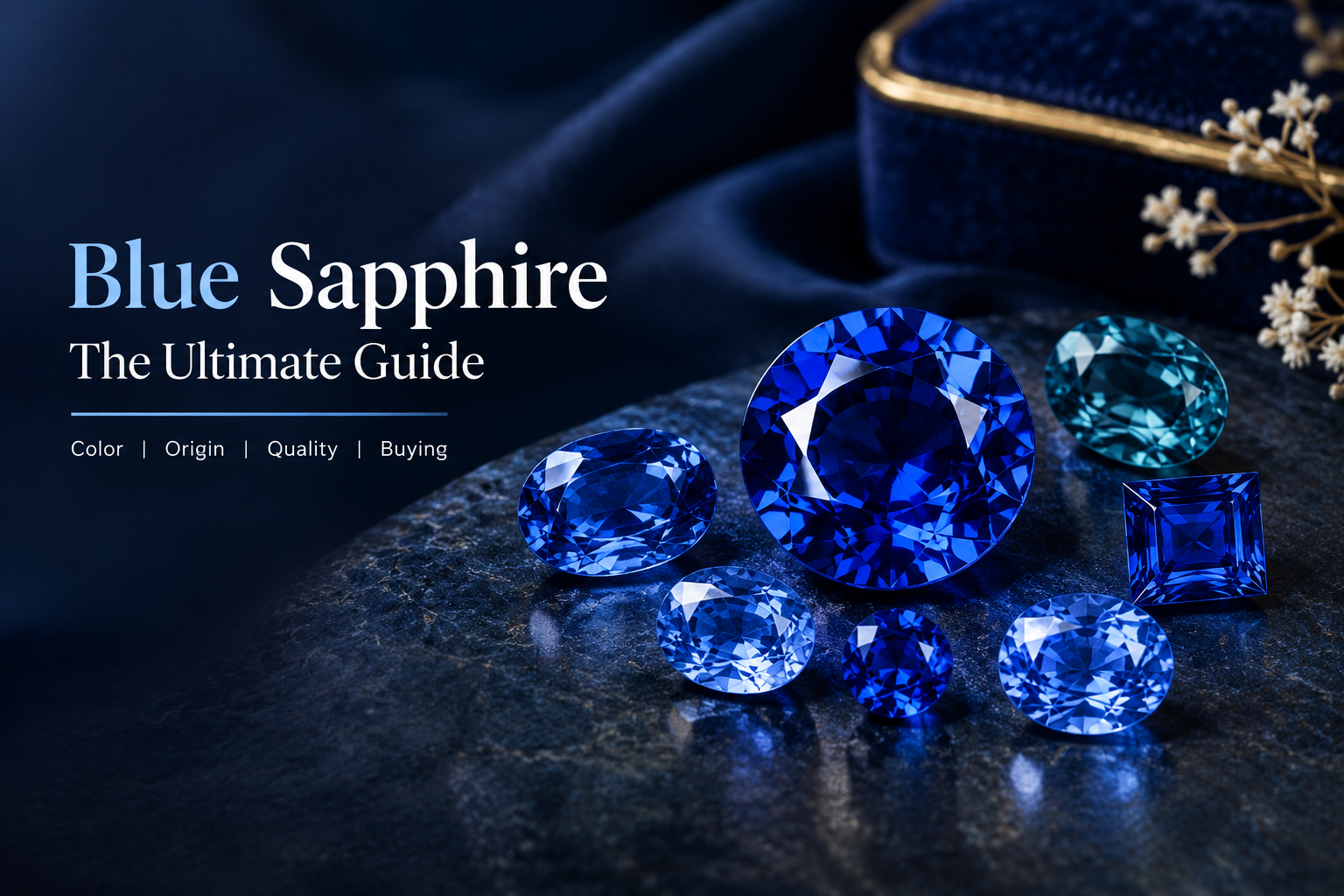
Blue sapphire is one of the most recognized colored gemstones in the world. Its deep blue appearance, durability, and long history have made it a popular choice for engagement rings, fine jewelry, collectors, and custom gemstone designs.
Although many people simply think of sapphire as a blue gemstone, blue sapphires can actually vary considerably in color, origin, cut, clarity, treatment, and overall appearance. Understanding these differences is important when choosing a gemstone for jewelry or investment.
This guide explains what blue sapphire is, how its color is evaluated, why origin matters, which cuts are available, and what buyers should consider before purchasing a natural stone.
What Is Blue Sapphire?
Blue sapphire is the blue variety of the mineral corundum.
Corundum is a durable mineral that can occur in different colors. Red corundum is classified as ruby, while corundum in other colors is generally called sapphire.
The blue color of sapphire is primarily associated with trace elements within the crystal structure.
Blue sapphire is particularly valued because it combines attractive color with excellent durability. Corundum has a Mohs hardness of 9, making sapphire suitable for jewelry that is worn regularly.
Why Is Blue Sapphire So Popular?
There are several reasons for the popularity of blue sapphire.
First, its blue color can range from light and delicate shades to rich, saturated deep blue.
Second, sapphire is durable enough for everyday jewelry when properly cut and set.
Third, blue sapphire has a long association with traditional jewelry and important gemstones.
It can be used in:
- Engagement rings
- Wedding jewelry
- Earrings
- Pendants
- Bracelets
- Cocktail rings
- Custom jewelry
- Collector gemstones
Its versatility makes it useful for both classic and contemporary designs.
Blue Sapphire Color
Color is one of the most important characteristics when evaluating a blue sapphire.
Buyers should consider three major elements:
Hue
Hue describes the basic color appearance.
A sapphire may appear blue with slight violet or green influences.
Tone
Tone describes how light or dark the gemstone appears.
A very dark sapphire can sometimes appear nearly black under certain lighting conditions.
Saturation
Saturation describes the intensity of the color.
Highly saturated blue can create a vivid appearance, while weak saturation may produce a grayish or less intense stone.
The ideal combination depends on personal preference and the individual gemstone.
Kashmir Blue Sapphire
Kashmir sapphire is famous for its exceptional blue appearance and historical importance.
The term is associated with sapphires from the Kashmir region and is often connected with rich, velvety blue color.
Because genuine Kashmir-origin stones are highly sought after, buyers should distinguish between a gemstone described as “Kashmir blue” in color and a gemstone with documented geographic origin from Kashmir.
Origin claims should be supported by appropriate documentation when they materially affect value.
NW Gems’ current blue sapphire collection includes listings described as Kashmir Blue Sapphire, including vibrant and extra-fine round diamond-cut options.
Montana Blue Sapphire
Montana is another notable source of sapphire.
Montana sapphires are known for their range of colors, including blue and blue-green shades.
Their appearance can differ considerably from traditional deep-blue sapphire.
The current NW Gems collection includes Natural Fine Blue Montana Sapphire and Natural Fine Blue-Green Montana Sapphire listings.
For buyers who want an American-origin gemstone, Montana sapphire can be particularly interesting.
Sri Lankan Blue Sapphire
Sri Lanka has a long history of producing sapphire.
Sri Lankan blue sapphires can occur in a range of blue colors, including lighter and more vivid shades.
The appearance of an individual stone depends on its geological formation and treatment history.
NW Gems currently lists several blue sapphire products identified with Sri Lanka as the origin, including cornflower blue and dark blue varieties.
Blue Sapphire Cuts
Cut has a major effect on how a sapphire looks.
Common cuts include:
- Round
- Oval
- Princess
- Cushion
- Emerald
- Square step
Princess cuts provide a modern geometric appearance.
Step cuts emphasize clarity and color rather than maximizing scintillation in the same way as brilliant cuts.
The current [blue sapphire collection at NW Gems] includes round diamond-cut, round faceted, princess and square-step sapphire options.
Natural Blue Sapphire
Natural sapphire forms through geological processes rather than being manufactured in a laboratory.
Natural stones can contain inclusions and internal characteristics that reflect their formation history.
A natural sapphire does not have to be completely inclusion-free to be attractive.
Instead, buyers should evaluate the overall combination of:
- Color
- Clarity
- Cut
- Treatment
- Size
- Origin
- Durability
Round cuts are popular because of their symmetry and versatility of cripsywire.
Treated Blue Sapphire
Treatment is an important consideration when buying sapphire.
Heat treatment is widely encountered in the sapphire market.
Heating can be used to improve color and clarity.
A treated sapphire is still a sapphire, but the treatment should be disclosed.
NW Gems states that its gemstone listings provide treatment disclosure, and individual blue sapphire listings identify treatment information such as heat-only treatment where applicable.
Blue Sapphire Clarity
Clarity refers to inclusions and internal characteristics.
Unlike diamonds, sapphire clarity is not normally evaluated using exactly the same consumer grading framework.
Some inclusions are common in natural sapphire.
The key question is whether inclusions significantly affect the gemstone’s appearance or durability.
For smaller stones, minor inclusions may be less noticeable.
Blue Sapphire Size
Gemstone size is usually discussed in both millimeters and carat weight.
For jewelry settings, millimeter dimensions are especially important.
A jeweler designing a ring may require a specific length and width.
For example, an oval sapphire might need to fit a particular mounting.
NW Gems notes that millimeter size is the best measurement for selecting the appropriate gemstone size.
Blue Sapphire for Engagement Rings
Blue sapphire is a popular alternative to traditional diamond engagement rings.
A blue sapphire center stone can be surrounded by diamonds or placed in a simple solitaire setting.
Its durability makes it practical for regular wear.
When selecting an engagement-ring sapphire, pay particular attention to color, dimensions, treatment, and the security of the setting.
Blue Sapphire and Diamonds
Blue sapphire and diamonds create a classic contrast.
The white appearance of diamonds can emphasize the saturated blue color of sapphire.
This combination can be used in:
- Halo rings
- Three-stone rings
- Earrings
- Pendants
- Bracelets
The choice between diamond accents and a minimalist setting depends on the desired style.
How to Buy Blue Sapphire Online
When shopping online, review the complete product information.
Check:
- Natural or synthetic origin
- Color
- Cut
- Dimensions
- Carat weight
- Clarity
- Treatment
- Geographic origin
- Product photographs
- Return policy
Do not rely only on commercial terms such as AAA or AA+.
The actual gemstone characteristics matter more than the label.
Blue Sapphire Care
Sapphire is highly durable, but jewelry still requires proper care.
Avoid unnecessary impact and harsh chemicals.
Clean sapphire jewelry gently and inspect the setting regularly.
If a sapphire has been treated, ask a professional jeweler about appropriate cleaning methods.
Blue Sapphire and Technology Research
Gemstone buyers increasingly use online research to compare gemstone characteristics, origins, treatments, and jewelry options before making a purchase.
For readers who are also interested in digital technology, AI, software, and online tools, CripsyWire provides practical technology guides and explainers that can help users research products and digital resources more efficiently.
Final Thoughts
Blue sapphire offers a combination of rich color, durability, history, and versatility that few gemstones can match.
From Kashmir-style blue to Montana sapphire and Sri Lankan stones, there are many varieties to explore.
The most important factors are color, cut, clarity, treatment, dimensions, origin, and overall appearance.
Whether you are buying a sapphire for an engagement ring, custom jewelry, collection, or personal use, taking time to understand these characteristics can help you make a more informed decision.
For buyers comparing natural blue sapphire options, the NW Gems Sapphire Blue collection provides a range of colors, origins and cuts to explore.