
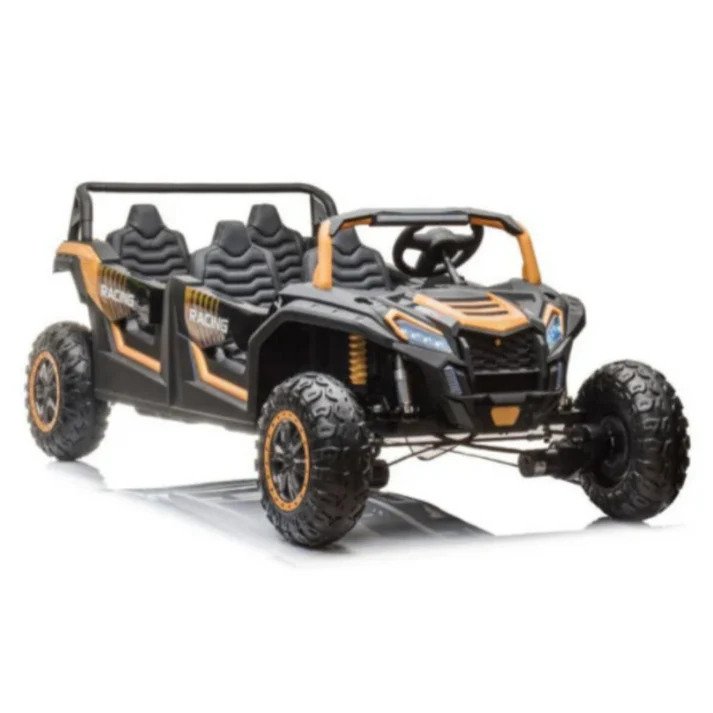
Choosing an outdoor vehicle for a child can be confusing because there are many options that look similar at first glance. Two popular choices are a buggy car and a traditional kids ride-on car.
Both can provide children with an enjoyable driving experience, but they are designed with different priorities in mind.
A kids ride-on car is generally focused on recreational play, simple driving, and car-inspired designs. A buggy car is typically more rugged, with an off-road appearance and features designed for suitable outdoor environments.
So, which one is better?
A buggy car may be the better choice for families looking for a more adventurous outdoor driving experience, while a traditional ride-on car can be more suitable for younger children and imaginative play.
The right choice ultimately depends on your child’s age, experience, size, intended riding environment, and the type of experience you want from the vehicle.
What Is a Buggy Car?
A buggy car is an off-road-style recreational vehicle designed for outdoor driving. Depending on the model, it may use an electric motor or petrol engine and can come in different sizes and seating configurations.
Compared with a conventional ride-on car, a buggy usually has a more rugged appearance and may feature:
- Larger tires
- Protective framing
- Higher ground clearance
- More robust construction
- Safety harnesses or seat belts
- Outdoor-oriented suspension
- Single, two, or multiple seating configurations
However, specifications vary significantly between models.
Parents should always check the manufacturer’s recommended age, weight capacity, speed, and intended use before purchasing a buggy for a child.
What Is a Kids Ride-On Car?
A kids ride-on car is a child-sized vehicle designed primarily for recreational driving and imaginative play.
These vehicles often imitate the appearance of real cars, SUVs, trucks, or other popular vehicles.
Depending on the model, they may include:
- Rechargeable batteries
- Accelerator pedals
- Steering wheels
- Forward and reverse functions
- LED lights
- Music
- Bluetooth connectivity
- Parental remote controls
- Safety belts
Ride-on cars are generally designed around simplicity and entertainment, making them popular for home gardens, driveways, and other controlled environments where their use is appropriate.
Buggy Car vs Ride-On Car: The Main Difference
The biggest difference is the intended experience.
A ride-on car is usually closer to a toy vehicle, while a buggy is generally designed to provide a more outdoor and off-road-oriented recreational experience.
Here is a simple comparison:
| Feature | Buggy Car | Kids Ride-On Car |
| Main purpose | Outdoor recreation | Recreational play |
| Design | Rugged/off-road | Car-inspired |
| Typical terrain | Suitable outdoor terrain | Smooth, controlled surfaces |
| Power options | Electric or petrol depending on model | Usually electric |
| Seating | Varies by model | Usually one or two children |
| Ground clearance | Often higher | Generally lower |
| Experience level | Can require more experience | Often easier for beginners |
| Maintenance | Can be higher depending on model | Generally simpler |
Neither option is automatically better.
The better choice depends on the child and the intended use.
Which Is Better for Younger Children?
For younger children, a conventional ride-on car may often be easier to manage.
Many children’s ride-on cars are designed with relatively simple controls and may include parental remote controls that allow an adult to assist with operation.
However, age recommendations vary from model to model.
Parents should never assume that a vehicle is suitable simply because it is marketed as a children’s product.
Check:
- Recommended age
- Maximum weight
- Seat size
- Speed
- Control layout
- Safety features
- Manufacturer instructions
If a child cannot comfortably reach the controls or maintain a proper seating position, the vehicle may not be appropriate.
Which Is Better for Older or More Experienced Riders?
Older children with previous experience operating suitable ride-on vehicles may be interested in a buggy.
A buggy can provide a different experience because of its larger frame, rugged styling, and outdoor-oriented design.
However, older age does not automatically mean that a child is ready for a high-powered vehicle.
Parents should consider experience as well as age.
A child who has never operated a vehicle may require more practice before moving to a larger or more powerful buggy.
Buggy Cars Are Designed for Outdoor Adventures
One of the major attractions of a buggy is its outdoor-oriented design.
A suitable buggy may be better suited to certain outdoor surfaces than a conventional ride-on car, depending on its specifications.
Features such as larger tires, increased ground clearance, protective structures, and suspension can contribute to an outdoor driving experience.
However, parents should not assume that every buggy can safely handle every type of terrain.
The vehicle’s specifications should always be checked before use.
For example, steep slopes, loose surfaces, water, rocks, or uneven terrain may present additional risks depending on the specific model.
Ride-On Cars Are Ideal for Imaginative Play
Kids ride-on cars have a different advantage.
They can combine driving with imaginative play.
A child can pretend to be:
- A race-car driver
- A delivery driver
- A police officer
- An explorer
- A truck driver
- A family car driver
This type of play can encourage creativity while allowing children to practice basic steering and coordination.
For younger children whose primary goal is simply to have fun driving around the home, a traditional ride-on car may be all they need.
What About Safety?
Safety should be a priority regardless of which vehicle you choose.
Parents should look for suitable safety features and follow the manufacturer’s instructions.
Safety Features in Buggy Cars
Depending on the model, a buggy may include:
- Safety harnesses
- Seat belts
- Protective frames
- Roll-over protection structures
- Reliable brakes
- Durable tires
- Protective seating
The exact features vary by vehicle.
Safety Features in Ride-On Cars
Ride-on cars may include:
- Seat belts
- Parental remote controls
- Low-speed settings
- Emergency stop functionality
- Stable wheelbases
- Simple controls
Again, features vary between models.
The presence of safety equipment does not eliminate the need for supervision.
Electric Buggy vs Electric Ride-On Car
Most conventional kids ride-on cars use rechargeable batteries.
Electric buggies can also use rechargeable batteries, although larger models may have different power requirements.
Electric vehicles generally offer some practical benefits:
- Quiet operation
- No petrol storage
- Simple starting
- Convenient charging
- Less engine-related maintenance
However, parents should consider the battery’s capacity and expected operating time.
Before buying an electric vehicle, check:
- Battery voltage
- Battery capacity
- Charging time
- Expected run time
- Replacement battery availability
- Charger requirements
This can help you understand the long-term practicality of the vehicle.
What About Petrol Buggies?
Some larger buggies use petrol engines.
Petrol-powered vehicles can provide a more traditional recreational driving experience and may offer greater performance depending on the engine and model.
However, they also require more mechanical maintenance.
This can include:
- Oil changes
- Engine servicing
- Air-filter maintenance
- Fuel-system checks
- Brake inspections
- Tire maintenance
A petrol buggy may therefore be better suited to families who understand the additional maintenance involved and have an appropriate environment for its use.
How Does Terrain Affect Your Choice?
Terrain is an important consideration.
A traditional ride-on car is generally better suited to controlled surfaces such as:
- Flat gardens
- Driveways
- Smooth private areas
- Suitable indoor or outdoor play spaces
A suitable buggy may be designed for a wider range of outdoor surfaces.
However, this does not mean that all buggies are suitable for sand dunes or difficult off-road terrain.
Always check the manufacturer’s specifications.
If your main goal is recreational driving around the house, a ride-on car may make more sense.
If your family specifically wants an outdoor recreational vehicle and has an appropriate environment for it, a buggy may be worth considering.
Seating Capacity
Seating is another major difference between different types of vehicles.
Many ride-on cars are designed for one or two children.
Buggies can offer different configurations depending on the model.
For families who want multiple passengers, a larger 4 seater dune buggy can provide significantly more seating capacity.
A four-seat vehicle can be attractive for families who want to enjoy outdoor recreational activities together.
However, larger vehicles require more storage space and may require more planning for transportation.
Size and Storage Requirements
A ride-on car is usually easier to store because it is relatively compact.
A larger buggy can require considerably more space.
Before purchasing, measure:
- Garage space
- Storage area
- Door openings
- Transportation space
- Available operating area
A vehicle that does not fit through your garage door or cannot be transported conveniently can become difficult to use.
This is particularly important when considering larger buggies for sale.
Maintenance Comparison
Maintenance is another area where the two categories can differ.
Ride-On Cars
Electric ride-on cars generally require basic maintenance such as:
- Charging the battery
- Checking tires
- Cleaning the vehicle
- Inspecting controls
- Checking electrical connections
Buggies
Depending on the model, buggies may require:
- Battery maintenance
- Tire inspections
- Brake checks
- Suspension checks
- Engine servicing
- Oil changes
- Air-filter maintenance
Therefore, parents should consider not just the purchase price but also the expected ownership requirements.
What Should You Consider When Looking at Buggies for Sale?
If you decide that a buggy is the better option, do not choose one simply because it has an attractive design.
When comparing buggies for sale, consider:
1. Rider Age
Check the manufacturer’s recommended age.
2. Weight Capacity
Make sure the rider or passengers are within the specified limits.
3. Engine or Motor
Determine whether electric or petrol power is more suitable.
4. Seating
Decide whether you need one, two, or four seats.
5. Safety
Check the available restraint and braking systems.
6. Terrain
Make sure the vehicle is suitable for the intended environment.
7. Maintenance
Understand what servicing will be required.
8. Storage
Make sure you have sufficient space.
9. Transportation
Consider how you will move the vehicle if necessary.
10. Support
Check warranty, spare parts, and after-sales support.
Buggy Car or Ride-On Car: Which One Should You Buy?
There is no universal answer.
Choose a buggy car if your priorities include:
- Outdoor recreational driving
- Rugged styling
- Larger tires
- More substantial construction
- Off-road-oriented features
- Multiple seating options
- A more adventurous driving experience
A traditional ride-on car may be better if your priorities include:
- Younger children
- Simple controls
- Imaginative play
- Home use
- Compact storage
- Parental remote control
- Lower complexity
The most important factor is matching the vehicle to the child’s needs.
A Simple Decision Guide
Use this quick guide before buying.
Choose a ride-on car if:
Your child is younger, mainly wants imaginative play, and will use the vehicle in a controlled environment.
Consider a buggy if:
Your child meets the manufacturer’s requirements, has appropriate experience, and your family wants a more outdoor-focused recreational vehicle.
Consider a 4 seater dune buggy if:
Your priority is transporting multiple passengers and you have an appropriate environment, storage space, and transportation solution.
Common Buying Mistakes
Buying for Appearance
Children may prefer a vehicle because it looks exciting, but appearance should not determine the purchase.
Choosing Excessive Power
More power can mean greater difficulty and responsibility.
Ignoring Weight Limits
Weight capacity is a fundamental specification.
Forgetting the Environment
A vehicle should be used only where it is appropriate and permitted.
Not Checking Maintenance
Understand the ongoing requirements before purchasing.
Assuming Bigger Is Better
A larger vehicle is only better when its size and capacity actually meet your needs.
Final Thoughts
The choice between a buggy car and a traditional kids ride-on car ultimately depends on the type of experience you want for your child.
A ride-on car is often a practical option for younger children, imaginative play, and controlled environments. A suitable buggy can provide a more rugged, outdoor-oriented recreational experience for riders who meet the manufacturer’s requirements.
Before purchasing, consider the child’s age, weight, experience, intended terrain, vehicle power, seating capacity, safety features, storage requirements, and maintenance needs.
If you’re currently comparing different options, start by identifying how and where the vehicle will actually be used. Once you know that, it becomes much easier to narrow down the buggies for sale and choose a model that fits your requirements.
For families looking for more children’s products, play equipment, ride-on vehicles, and toys, Toyzinn provides a range of products for different ages and play preferences.
Frequently Asked Questions
1. What is the difference between a buggy car and a kids ride-on car?
A buggy car is generally designed with a more rugged, outdoor-oriented structure, while a kids ride-on car is primarily designed for recreational play and imaginative driving.
2. Is a buggy car suitable for children?
Some buggies are designed for children, while others are intended for older riders or adults. Always follow the manufacturer’s age, weight, speed, and usage recommendations.
3. Are ride-on cars safer than buggies?
Neither category is automatically safer. Safety depends on the specific vehicle, rider suitability, safety equipment, riding environment, and responsible adult supervision.
4. Is an electric buggy better than a ride-on car?
It depends on your needs. An electric buggy may provide a more substantial outdoor driving experience, while a ride-on car may be better for younger children and simple recreational play.
5. What should I look for when buying a buggy?
Consider age suitability, weight capacity, power source, speed, seating, safety features, tires, suspension, intended terrain, maintenance, storage, and after-sales support.
6. What is a 4 seater dune buggy?
A 4 seater dune buggy is a larger recreational vehicle designed to accommodate four occupants within the manufacturer’s specified weight and seating limits.