
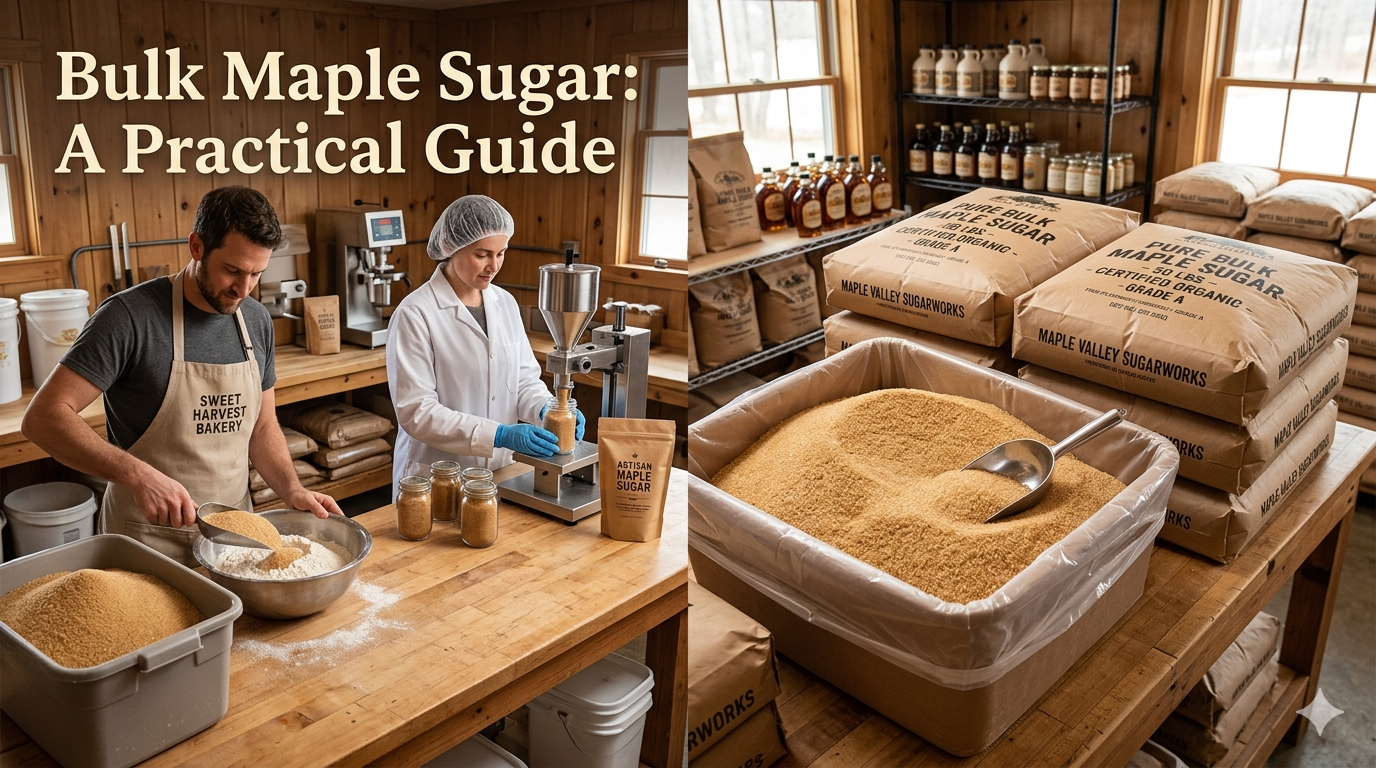
Maple sugar has become a sought-after ingredient in both home kitchens and commercial food production. As consumers look for natural sweeteners with recognizable ingredients, maple sugar offers a distinctive flavor profile and a minimally processed alternative to refined sugar. However, sourcing, storing, and using it efficiently can be challenging, especially when larger quantities are involved.
For businesses and serious bakers, understanding how to purchase and work with bulk maple sugar can improve product consistency, reduce ingredient costs, and create unique flavor experiences. Whether you operate a bakery, manufacture specialty foods, or simply enjoy experimenting with natural sweeteners, knowing the practical aspects of bulk purchasing can help you maximize value while maintaining quality.
Unlike many sweeteners on the market, maple sugar carries the rich character of pure maple syrup in a dry, shelf-stable form. That unique combination makes it useful across a wide range of applications, from baked goods and beverages to spice blends and packaged foods.
Understanding Bulk Maple Sugar
Bulk maple sugar is produced by heating pure maple syrup until most of the moisture evaporates. The concentrated syrup is then stirred and crystallized into fine granules. The result is a sweetener made entirely from maple syrup without added ingredients.
Because it originates from maple sap, the final product retains many of the flavor compounds that make maple syrup popular. Depending on the syrup grade used during production, maple sugar may have notes of caramel, toffee, vanilla, or mild woodiness.
Commercial buyers often purchase maple sugar in larger quantities for several reasons:
- Consistent ingredient availability
- Lower cost per pound compared to small retail packages
- Reduced packaging waste
- Improved production planning
- Greater flexibility for recipe development
Food manufacturers, bakeries, coffee roasters, breweries, and specialty food brands commonly incorporate maple sugar into their products to achieve a distinctive taste while maintaining clean ingredient labels.
How to Choose the Right Bulk Maple Sugar
Not all maple sugar products are identical. Before purchasing in larger quantities, evaluate several important factors.
Granulation Size
Maple sugar is available in different textures, ranging from very fine powder-like consistency to larger granules. Fine granulation dissolves quickly and works well in beverages, frosting, and dry mixes.
Coarser granules may be better suited for toppings, finishing applications, or products where texture is desirable.
Flavor Intensity
The flavor can vary based on the maple syrup used during production. Some batches deliver a lighter sweetness, while others provide deeper caramelized notes.
If consistency matters for commercial production, request product specifications and sample quantities before committing to large orders.
Moisture Content
Maple sugar naturally absorbs moisture from the environment. Lower moisture content generally supports longer shelf life and improved storage stability.
Businesses should verify packaging standards and storage recommendations from suppliers to maintain product quality throughout inventory cycles.
A Step-by-Step Strategy for Buying Bulk Maple Sugar
Purchasing large quantities requires more planning than ordering retail-sized packages. Following a structured approach can help avoid common problems.
Step 1: Estimate Actual Usage
Review historical purchasing data or production schedules to determine realistic consumption levels.
For example:
- A bakery producing maple cookies weekly may require several pounds each month.
- A granola manufacturer may use hundreds of pounds during a production cycle.
- A coffee company developing flavored blends might need seasonal quantities.
Accurate forecasting reduces the risk of excess inventory.
Step 2: Test Product Samples
Never assume all maple sugar tastes the same.
Small sample testing allows you to evaluate:
- Flavor compatibility
- Dissolution rate
- Texture
- Color consistency
- Performance in recipes
Testing prevents costly formulation issues later.
Step 3: Verify Packaging Options
Bulk orders often come in larger bags or food-grade containers.
Consider:
- Storage space
- Handling requirements
- Frequency of use
- Repackaging needs
Smaller bulk units may improve workflow if ingredients are accessed frequently.
Step 4: Review Shelf-Life Requirements
Inventory turnover should align with product shelf life.
Although maple sugar stores well under proper conditions, excessive stock levels can create quality concerns if products remain unused for extended periods.
Step 5: Establish Storage Procedures
Create standard operating procedures for receiving, storing, and rotating inventory.
Proper handling helps preserve flavor and texture while reducing waste.
Common Applications for Bulk Maple Sugar
Maple sugar’s versatility contributes significantly to its growing popularity.
Baking and Pastry Production
Many bakeries use maple sugar to create:
- Cookies
- Muffins
- Cakes
- Scones
- Sweet breads
Because it contains maple flavor naturally, it can reduce the need for artificial flavoring agents.
Beverage Formulations
Maple sugar dissolves well in:
- Coffee drinks
- Tea blends
- Hot chocolate
- Smoothie mixes
- Specialty beverage concentrates
Its unique flavor profile can help products stand out in competitive markets.
Seasoning and Spice Blends
Food manufacturers frequently include maple sugar in dry rubs and seasoning mixes.
Popular applications include:
- Barbecue seasoning
- Breakfast sausage blends
- Roasted nut coatings
- Snack seasonings
The sweetness balances savory and smoky ingredients effectively.
Packaged Consumer Products
Maple sugar appears in numerous retail products, including:
- Granola
- Protein bars
- Instant oatmeal
- Pancake mixes
- Dessert toppings
Clean-label consumers often appreciate ingredient lists that contain recognizable sweeteners.
Common Mistakes When Purchasing and Using Bulk Maple Sugar
Even experienced buyers occasionally encounter challenges.
Overestimating Demand
Ordering excessive inventory can create storage issues and increase carrying costs.
Purchase quantities that align with realistic production forecasts.
Ignoring Humidity Control
Maple sugar readily absorbs moisture.
Without proper storage conditions, clumping may occur, affecting handling and product consistency.
Substituting One-to-One Without Testing
Although maple sugar can replace many sweeteners, recipe performance may change.
Differences in flavor concentration and moisture behavior can impact finished products.
Always conduct formulation testing before full-scale implementation.
Focusing Solely on Price
The lowest-cost supplier is not always the best option.
Evaluate:
- Product consistency
- Packaging quality
- Delivery reliability
- Technical support
- Production standards
A slightly higher ingredient cost may produce better long-term results.
Expert Tips for Maximizing Value
Professionals who regularly work with maple sugar often follow several best practices.
First, maintain consistent storage temperatures and keep containers sealed whenever possible. This simple habit helps preserve texture and reduces moisture absorption.
Second, document recipe adjustments carefully. Small changes in sweetener type can influence flavor balance, baking performance, and customer perception. Detailed records simplify future production runs.
Third, introduce maple sugar gradually when reformulating existing products. Side-by-side testing with customer panels or internal quality teams can identify the ideal usage rate before large-scale rollout.
Another useful strategy involves pairing maple sugar with complementary flavors. Cinnamon, pecan, apple, pumpkin, coffee, vanilla, and toasted grains often enhance its natural characteristics without overwhelming the ingredient.
Finally, monitor inventory turnover regularly. Businesses that review ingredient usage monthly can identify purchasing patterns, reduce waste, and improve ordering efficiency throughout the year.
Conclusion
Bulk maple sugar offers a practical solution for businesses and individuals seeking a natural sweetener with distinctive flavor and broad application potential. Its versatility makes it suitable for baking, beverages, seasoning blends, and packaged foods, while larger-volume purchasing can improve cost efficiency and operational planning.
Success with maple sugar depends on understanding product specifications, testing before large-scale use, implementing proper storage practices, and maintaining realistic inventory levels. By approaching procurement strategically and applying proven handling techniques, users can consistently achieve high-quality results while making the most of this unique maple-derived ingredient.