
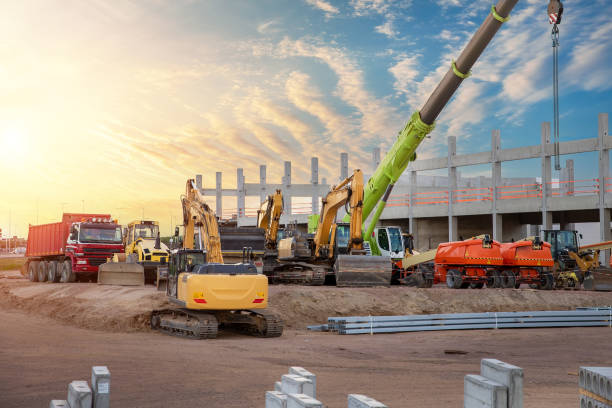
Egypt’s mining industry is entering a period of operational change as regulatory modernization, renewed mineral exploration, infrastructure development, and technology adoption influence equipment requirements. Mining companies increasingly need machinery that can support exploration, excavation, material handling, processing, and transportation across geographically challenging operating environments.
According to the Egypt mining equipment industry analysis published by Vyansa Intelligence, the sector was valued at USD 185 million in 2025 and is projected to reach USD 345 million by 2032, expanding at a compound annual growth rate of 9.31% from 2026 to 2032. These figures indicate a strengthening industry outlook shaped by rising mining activity and the gradual modernization of equipment fleets.
Mining Reforms Are Encouraging Exploration Activity
Egypt has substantial deposits of gold, copper, phosphates, and other industrial minerals, but many mineral resources have historically remained underexplored. Recent reforms and modernization initiatives are intended to improve the investment environment, simplify licensing processes, and encourage greater participation by domestic and international mining companies.
The U.S. International Trade Administration notes that the Egyptian Mineral Resources Authority has been involved in modernization initiatives designed to attract international mining companies. Renewed investor interest, combined with reforms introduced in recent years, is supporting exploration across several mineral-rich areas of the country. The resulting growth in exploration programs can increase demand for drilling machines, geological surveying systems, excavators, loaders, and supporting transport equipment.
As more exploration licences progress toward commercial development, equipment requirements are likely to move beyond basic prospecting machinery. Operators may require larger fleets capable of managing extraction, crushing, screening, hauling, and mineral processing. This transition creates growth opportunities for manufacturers and service providers offering equipment suitable for both surface and underground operations.
Surface Mining Equipment Remains Operationally Important
Surface mining is commonly used where mineral deposits can be accessed without constructing extensive underground networks. Equipment such as hydraulic excavators, bulldozers, wheel loaders, drilling rigs, crushing systems, and haul trucks plays an important role in removing overburden and transporting extracted material.
Egypt’s desert terrain creates specific operational requirements. Machinery must be capable of functioning under high temperatures, dusty conditions, abrasive material exposure, and limited access to maintenance facilities. Equipment durability, engine cooling, filtration, tyre performance, and fuel efficiency can therefore influence purchasing decisions.
The equipment growth forecast for Egypt also highlights the importance of logistics limitations in desert and rural areas. Poor road connectivity, long transport distances, and pressure on loading infrastructure may require mining operators to depend heavily on reliable trucks and material-handling machinery.
Digital Technologies Are Changing Equipment Operations
Emerging technologies are becoming more relevant as mining companies seek higher productivity and improved operational control. Modern equipment can incorporate telematics, global positioning systems (GPS), remote monitoring, fleet-management software, and sensors that track fuel consumption, engine performance, component wear, and machine utilization.
These systems allow operators to identify inefficiencies and schedule maintenance before mechanical failures interrupt production. Predictive maintenance can be particularly valuable at remote mining sites, where equipment breakdowns may result in extended downtime because spare parts and technical teams must travel long distances.
Digital platforms can also support geological data management and licensing transparency. Egypt’s broader mining modernization agenda includes efforts to improve access to information and create a more structured operating environment. As digital processes become more widely adopted, equipment suppliers may increasingly compete on software integration, monitoring capabilities, and after-sales technical support rather than machinery specifications alone.
Automation Could Improve Safety and Productivity
Automation represents another important direction in mining equipment development. Semi-autonomous drilling rigs, remotely operated machinery, collision-avoidance systems, and automated haulage technologies can reduce workers’ exposure to hazardous operating areas.
Adoption in Egypt is likely to be gradual because automated systems require significant capital investment, reliable communications infrastructure, technical expertise, and specialized maintenance. However, larger mining projects may increasingly examine automation where it can improve consistency, reduce operational interruptions, or support worker safety.
Rather than replacing conventional equipment immediately, automation is more likely to be introduced through selected functions. Examples include automated drilling controls, equipment proximity warnings, remote diagnostics, and centralized fleet monitoring. This incremental approach allows operators to test emerging technologies before implementing fully integrated systems.
Equipment Maintenance Will Influence Purchasing Decisions
Mining machinery operates under intense mechanical stress, making maintenance capability a central consideration. Buyers generally evaluate not only the initial equipment price but also spare-parts availability, service coverage, fuel consumption, expected operating life, and total ownership cost.
This issue is particularly important in remote Egyptian mining locations. A machine that cannot be repaired promptly may delay extraction and disrupt the movement of materials throughout the site. Suppliers with dependable service networks, trained technicians, parts inventories, and remote diagnostic tools may therefore be better positioned to support industry expansion.
Used and refurbished machinery could also remain relevant, particularly for smaller operators seeking to control capital expenditure. However, older equipment may create trade-offs involving fuel efficiency, emissions performance, productivity, and maintenance frequency.
Sustainability Is Influencing Equipment Development
Environmental performance is becoming an increasingly important part of mining operations. Equipment manufacturers are developing machines with more efficient engines, reduced emissions, improved hydraulic systems, and lower fuel consumption. Electric and hybrid equipment is also gaining attention internationally, although adoption depends on charging infrastructure, mine design, power availability, and operating conditions.
Water scarcity is another relevant consideration in Egypt. Mining and mineral processing operations may need equipment that supports water recycling, dust suppression, tailings management, and efficient ore separation. Technologies that reduce water consumption may become increasingly important in environmentally sensitive or arid locations.
The Egyptian Mineral Resources Authority strategy emphasizes maximizing the value obtained from natural resources while supporting broader economic and industrial development. This policy direction reinforces the importance of efficient extraction, local processing, and responsible resource management.
Future Opportunities Across the Equipment Value Chain
The projected expansion from USD 185 million in 2025 to USD 345 million by 2032 suggests that opportunities will extend beyond the sale of heavy machinery. Demand may also grow for replacement parts, equipment leasing, refurbishment, operator training, digital fleet services, technical consulting, and predictive maintenance.
Companies serving the sector will need to understand the differences between exploration projects, developing mines, and established production sites. Each stage requires a different equipment mix, financing structure, service model, and level of technological sophistication.
The competitive landscape is therefore likely to depend on more than manufacturing capacity. Equipment reliability, local technical support, flexible financing, digital capabilities, and adaptation to desert operating conditions will shape supplier positioning. As mining projects advance, the industry outlook will increasingly reflect the ability of equipment providers and operators to combine productivity, safety, sustainability, and long-term asset performance.