
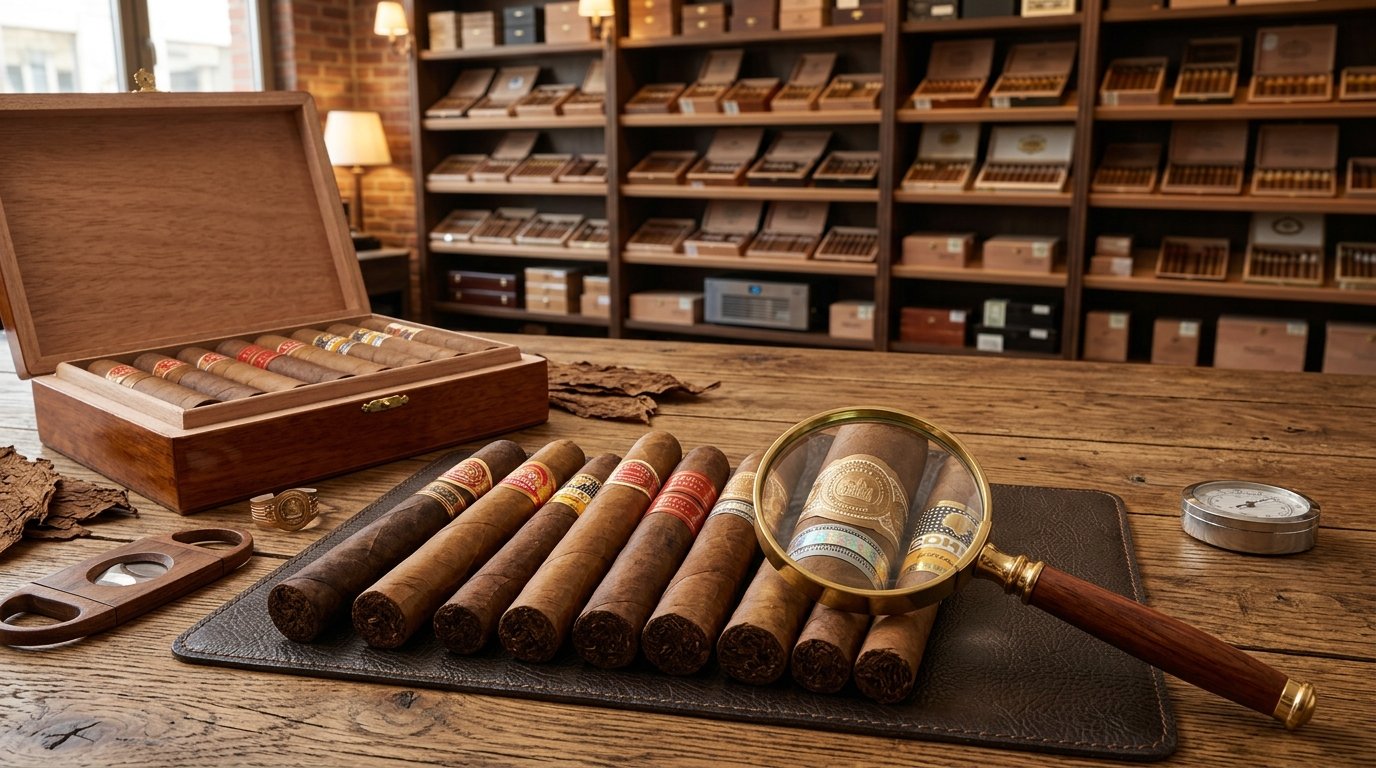
Authentic cigars reflect careful craftsmanship, quality tobacco, and consistent manufacturing standards. However, counterfeit products can make it difficult for buyers to recognize genuine items. Knowing what to inspect helps consumers make more informed purchasing decisions. Packaging, construction, aroma, and seller reputation all provide useful clues. Therefore, understanding these details can help reduce the risk of purchasing counterfeit cigars.
Whether you are an experienced enthusiast or a first-time buyer, authenticity should remain a priority. Before choosing a product, research the manufacturer and compare its packaging with reliable product information. For example, shoppers planning to buy 4 kings cigars online should review the retailer’s reputation, product descriptions, and available authenticity information. These steps provide a stronger starting point than relying on price or appearance alone. Nevertheless, no single visual clue can guarantee authenticity.
1. Purchase Cigars from Reputable Retailers
The seller is one of the first things to evaluate when purchasing cigars. Established retailers generally provide clearer product information and more consistent customer service. They may also explain their sourcing practices and offer assistance with product questions.
Before placing an order, research the retailer’s business history. Look for clear contact details, transparent policies, and realistic product descriptions. Independent customer reviews can also reveal recurring concerns about product quality or order fulfillment. However, consider several reviews rather than relying on one unusually positive or negative comment.
Additionally, be cautious when sellers offer prices far below typical retail levels. Discounts can be legitimate, especially during promotions or clearance events. Still, an unusually low price may warrant further investigation. Compare the offer with prices from multiple reputable sellers before deciding.
A professional-looking website does not automatically establish legitimacy. Counterfeit sellers can create convincing online stores and use copied product photographs. Therefore, examine the retailer’s reputation and business information alongside its website design.
2. Examine the Packaging Carefully
Packaging provides several clues when evaluating a cigar’s authenticity. Genuine products usually follow the manufacturer’s established presentation standards. These may include recognizable branding, consistent printing, accurate product information, and carefully applied labels.
Start by checking the spelling of the brand and product name. Counterfeit packaging may contain spelling mistakes, unusual fonts, inconsistent colors, or poorly aligned graphics. Compare the packaging with photographs from the manufacturer’s official website when available.
Next, inspect the print quality and overall finish. Blurry images, faded colors, uneven borders, and visibly poor printing can raise concerns. However, packaging can vary between production batches and markets. Minor differences alone do not prove that a cigar is counterfeit.
Check any seals, tax stamps, or other regulatory markings where applicable. Their appearance and requirements vary by country and product category. Consequently, research the relevant rules rather than assuming every authentic cigar must carry the same markings.
Also, look for signs of tampering. Damaged seals, unusual adhesive marks, or labels placed over other information may deserve closer attention. Nevertheless, legitimate products can experience packaging damage during shipping or storage. Evaluate these clues together instead of drawing conclusions from one detail.
3. Verify the Cigar Band
A cigar band is often one of the easiest features to examine. It commonly displays the brand name, design elements, and other identifying details. Authentic bands typically reflect the manufacturer’s established visual style.
Compare the band with reliable images of the same cigar. Pay attention to lettering, colors, borders, logos, and the placement of decorative elements. Counterfeit products may imitate the general design but overlook small details.
Look closely at the printing and material quality. Smudged ink, rough edges, inconsistent lettering, or poorly positioned designs may indicate a problem. Still, authentic bands can show minor imperfections because of handling or production differences.
The band alone cannot confirm authenticity. Counterfeiters can reproduce packaging and labels with increasing accuracy. Therefore, use band inspection alongside seller verification, product research, and construction checks.
Avoid removing a band simply to investigate a suspected counterfeit. Removing it can damage the wrapper and may not reveal anything conclusive. Instead, photograph the details and compare them with trusted references.
4. Assess the Cigar’s Construction
Construction quality is another important factor when examining a cigar. A well-made cigar generally has a consistent shape and a wrapper that fits neatly around its body. Its surface should not display obvious damage or severe irregularities.
Begin by looking at the wrapper leaf. It should appear reasonably smooth and evenly applied for that cigar’s style. Small veins and natural variations are normal because tobacco leaves are agricultural products. Excessive tearing, loose wrapping, or unusual patches may justify further inspection.
Next, gently examine the cigar’s firmness without squeezing it too hard. It should generally feel evenly packed, rather than having pronounced soft spots or unusually hard sections. However, construction varies between handmade and machine-made cigars.
Check the cap at the head of the cigar. On many handmade cigars, the cap is carefully applied to help hold the wrapper together. A poorly finished cap can raise questions about construction quality, although it does not independently establish counterfeiting.
Also, examine the foot, where the filler tobacco is visible. The tobacco should look consistent with the product’s general construction and description. Uneven filling or loose pieces may indicate poor workmanship. Yet authentic cigars can also have occasional manufacturing defects.
5. Pay Attention to Aroma and Tobacco Quality
Aroma can offer additional information about a cigar’s condition and tobacco blend. Tobacco naturally develops distinctive scents through curing, fermentation, aging, and storage. Depending on the blend, aromas may include wood, earth, spice, cedar, or sweetness.
A strong chemical smell, unusual mustiness, or signs of contamination should prompt caution. However, smell alone cannot reliably distinguish genuine cigars from counterfeits. Some authentic cigars contain flavorings, while others naturally produce strong or unfamiliar aromas.
Examine the tobacco for visible mold or suspicious residue. Mold may appear as irregular patches or fuzzy growth, often accompanied by concerning storage conditions. Some harmless surface crystals can resemble mold, so avoid making a definite identification from appearance alone.
When uncertain, ask a knowledgeable retailer to inspect the product. Do not smoke a cigar that appears contaminated, has an unusual chemical odor, or shows unexplained deterioration. Proper storage and product condition matter regardless of authenticity.
6. Understand the Manufacturer’s Product Details
Researching the manufacturer’s official information helps you identify inconsistencies. Check the cigar’s name, size, shape, wrapper description, packaging, and stated tobacco blend. Compare these details with the product being offered.
For instance, a product description might list a particular size or wrapper type. If the item received differs substantially, contact the seller for clarification. Sometimes, manufacturers release different versions or update packaging over time. Therefore, confirm the relevant product version before assuming a mismatch proves counterfeiting.
Be careful with claims about country of origin. A cigar’s brand ownership, tobacco-growing location, and manufacturing location may differ. Read the product details closely to understand what each statement actually means.
You can also contact the manufacturer or authorized distributor when available. Provide clear photographs of the packaging, band, and cigar itself. Include the purchase details and any identifying codes shown on the product.
Manufacturers may be able to explain whether the packaging appears consistent with their products. However, not every brand offers individual authentication services. A lack of direct confirmation does not automatically mean that the item is counterfeit.
7. Check Batch Codes and Authentication Features
Some cigar manufacturers or distributors use batch codes, lot numbers, or other traceability features. These details may help connect a product with a particular production run. Their availability and format differ between brands.
If a code appears on the packaging, check whether it follows the manufacturer’s documented format. Do not assume that a code proves authenticity simply because it looks professional. Counterfeiters can copy genuine codes or print convincing imitations.
Some products may include QR codes or other digital verification features. When available, access them carefully and check whether they lead to an official manufacturer or authorized distributor website. A QR code that opens an unrelated page should raise questions.
However, not every authentic cigar includes digital verification. The absence of a QR code or batch number is not universal evidence of counterfeiting. Research the specific brand’s normal packaging and verification practices first.
Never enter personal or payment information into an unfamiliar verification website. Instead, navigate to the manufacturer’s official website independently. This reduces the risk of visiting a deceptive page created to imitate a legitimate business.
8. Be Cautious About Unusually Low Prices
Price can provide useful context, although it is not a definitive authentication test. Genuine cigars vary considerably in cost depending on tobacco quality, manufacturing methods, brand positioning, taxes, and distribution.
An exceptionally cheap offer may reflect a legitimate sale or discontinued packaging. Nevertheless, it can also signal questionable sourcing or counterfeit merchandise. Compare prices across multiple established retailers before making a decision.
Consider the complete offer rather than focusing on the headline price. Shipping costs, taxes, minimum order requirements, and return policies can affect the final amount. A seller that avoids basic questions about the product deserves additional scrutiny.
Be especially cautious when a seller pressures you to purchase immediately. Claims of extraordinary scarcity, guaranteed investment returns, or secret wholesale pricing may be designed to discourage careful research. A trustworthy seller should allow reasonable time for verification.
9. Inspect Storage Conditions and Product Freshness
Proper storage helps preserve a cigar’s condition, aroma, and construction. Although storage quality does not establish authenticity, poor conditions can damage genuine cigars. They can also make it harder to evaluate a product accurately.
Premium cigars are commonly stored in controlled humidity environments. Excessively dry conditions may cause wrappers to crack, while excessive moisture can encourage mold and other problems. Temperature fluctuations may also affect quality.
When purchasing in person, ask how the cigars are stored. A reputable retailer should be able to explain its general storage practices. Look for a clean display and packaging that protects products from avoidable damage.
For online orders, review shipping methods and the retailer’s policies for damaged goods. Consider taking photographs immediately after delivery if the packaging appears compromised. Contact the seller promptly when the product arrives in questionable condition.
Remember that dryness, cracking, or a stale aroma can result from poor storage rather than counterfeiting. Evaluate these signs alongside the product’s origin, packaging, and seller information.
10. Know What to Do If You Suspect a Counterfeit
If several details seem suspicious, avoid smoking the cigar until the concerns are resolved. Preserve the packaging, receipt, order confirmation, and any product labels. These materials may help the retailer or manufacturer investigate.
Take clear photographs of the cigar, band, packaging, and identifying codes. Then contact the seller through its official customer service channel. Describe the specific inconsistencies and request an explanation.
If the seller cannot resolve the concern, contact the manufacturer or an authorized distributor. Depending on your location, consumer protection agencies or relevant regulatory authorities may also offer guidance.
Avoid publicly declaring a product counterfeit without sufficient evidence. Packaging changes, storage damage, and manufacturing variation can sometimes explain unusual features. Documenting the facts supports a more reliable assessment.
If you purchased the product online, review the seller’s refund and return policy. Use the platform’s dispute process when appropriate. Keep communications and transaction records until the issue has been resolved.
Common Mistakes to Avoid
Buyers sometimes rely on a single feature when evaluating cigar authenticity. This approach can lead to incorrect conclusions. A convincing band does not guarantee authenticity, and a minor wrapper imperfection does not automatically indicate a fake.
Another common mistake is trusting online photographs without checking the seller. Product images may be copied from manufacturers or other retailers. Request current photographs when necessary, especially for higher-value purchases.
Some buyers also assume that expensive cigars must be genuine. Unfortunately, counterfeit products can carry premium prices. Likewise, a discounted cigar is not necessarily counterfeit.
Finally, avoid treating online reviews as absolute proof. Reviews can be incomplete, outdated, or misleading. Compare multiple sources and prioritize information from manufacturers and established retailers.
Conclusion
Identifying authentic cigars requires careful observation and reliable research. Start with the seller, then examine packaging, bands, construction, aroma, and product details. Check available codes and investigate unusual price differences before completing a purchase.
Most importantly, use several clues together rather than relying on one visual feature. Contact the manufacturer or an authorized distributor whenever significant questions remain. Although no simple inspection method guarantees authenticity, informed purchasing decisions can reduce risk and help protect product quality.
By taking time to verify the source and examine the details, buyers can make more confident choices. Careful research also encourages responsible retail practices and helps consumers avoid misleading offers. Authenticity, proper storage, and transparent product information should remain central considerations in every cigar purchase.