
Introduction
Shaving shouldn’t feel like a chore, and it definitely shouldn’t leave your skin red, tight, or itchy an hour later. If that’s been your experience, chances are the culprit isn’t your razor at all — it’s whatever’s in that can of foam you’ve been using for years. A natural shaving soap unisex formula changes that whole equation.
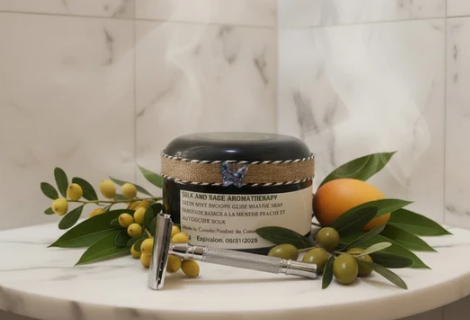
No harsh sulfates, no synthetic fragrance overload, just simple, plant-based ingredients doing what they’re supposed to do: helping the razor glide and the skin stay calm. This piece walks through what makes a shaving soap like this worth switching to, using a real example — the Fresh Mint Smooth Glide Shaving Soap from Silk & Sage Aromatherapy — to show how the pieces fit together in an actual product you can buy today.
What Makes a Shaving Soap “Natural” Anyway
That word gets thrown around a lot, and honestly, it’s earned a bit of a bad reputation because so many brands slap it on packaging without changing much underneath. A genuinely natural shaving soap means the ingredient list is short enough to read without a chemistry degree, and every item on it traces back to a plant, mineral, or naturally derived source rather than a lab-synthesized additive.
It also usually means no phthalates or artificial preservatives hiding behind vague terms like “fragrance.” Take the Fresh Mint version as a case study. It’s built around cold-pressed oils, which soften the skin and hair before the blade even touches it, plus mint for a cooling sensation that lingers after rinsing.
It’s also certified vegetarian-friendly, so there’s no ambiguity about what went into the bar. The soap comes with a small pink scoop included, a nice practical touch that keeps things tidy since bar soaps used for lathering can get a little messy in a wet shower caddy otherwise.
Why Skin Actually Reacts Better to Plant-Based Formulas
Skin irritation after shaving usually comes down to friction plus chemical stress happening at the same time. Standard canned foams often rely on aerosol propellants and detergents that strip natural oils right off the surface, leaving nothing to buffer the blade.
Swap that for a soap built on cold-pressed oils, and you get a slip layer that actually protects the skin barrier instead of dissolving it. Ever notice how your face or legs feel tighter after a synthetic-foam shave? That’s the stripped-oil effect talking. Mint plays a functional role here too, beyond just smelling fresh. Menthol-containing plants have a natural cooling property that can ease minor post-shave heat and redness, according to general dermatological research on menthol’s skin-soothing effects.
Combined with the moisturizing base oils, the result is a shave that treats the skin as something to protect rather than something to just get through. This is really the whole argument for going natural — it’s not about aesthetics, it’s about what’s actually happening at the skin level during and after the process.
Why “Unisex” Isn’t Just a Marketing Label
There’s a reason shaving soap doesn’t need to be split into “men’s” and “women’s” versions — skin doesn’t work differently based on gender, and hair removal mechanics are the same whether it’s a face, underarm, or leg. A well-formulated bar works everywhere hair grows, which is honestly more practical than stocking two or three different products for one household.
The Fresh Mint Smooth Glide bar reflects this directly in its usage instructions: lather with warm water, apply in circular motions to hair on the body or face (avoiding eyelashes and eyebrows), then rinse thoroughly. Nothing in that instruction assumes a particular user. It’s formulated to soften hair and protect skin broadly, which is exactly the point of a unisex approach — one soap, multiple people in the same house, one less thing cluttering the shower shelf.
What Being Chemical-Free Actually Changes Day to Day
People sometimes assume “chemical-free” is a marketing exaggeration, since technically everything is made of chemicals. What it really means in practical terms is the absence of synthetic additives that commonly trigger sensitivity — things like SLS (sodium lauryl sulfate), synthetic dyes, and artificial preservatives such as parabens.
The EWG’s Skin Deep database tracks a lot of these ingredients and their associated concerns, and it’s worth a look if you’re curious about what’s actually in your current shaving product. With the tree-nut-oil-based formula in this particular soap, the tradeoff is clear: you get real moisturizing benefit, but if you have a tree nut allergy, this isn’t the bar for you — the product label is upfront about that warning, which itself is a good sign of a brand that isn’t hiding potential allergens to make a sale.
It’s also meant for external use only, avoiding the eye area, and should be tossed if you ever notice a change in smell, texture, or appearance. Basic stuff, but it matters more with natural products since there’s nothing artificial keeping them shelf-stable indefinitely.
How to Actually Use a Bar Shaving Soap Well
If you’ve spent years using canned foam or gel, switching to a bar takes a small adjustment, though it’s nothing complicated. Start by wetting the bar and your hands with warm water — warm, not hot, since hot water can actually dry the skin out further. Work the soap into a lather using the included scoop or just your palms, then apply it in gentle circular motions over the area you’re shaving.
The circular motion matters more than people think. It lifts the hair slightly away from the skin and works the lather into the base of each strand, which is exactly what gives the razor a smoother, closer pass with less tugging. Rinse thoroughly afterward, and that mint cooling effect should kick in almost immediately.
Store the bar somewhere away from direct heat and light so it holds its texture longer — a shower shelf that gets blasted by hot water constantly isn’t ideal, funnily enough, so a slightly drier corner of the bathroom works better.
Choosing a Bar That’s Actually Handcrafted
Mass-produced soap and small-batch, handcrafted soap are not the same product wearing different packaging. Handcrafted bars, like the ones made by Silk & Sage Aromatherapy, tend to use cold-press extraction methods that preserve more of the natural oil’s nutrient profile compared to heat-processed, industrial methods. That’s a meaningful difference if skin-nourishment is actually the goal rather than just getting something that lathers.
Pricing reflects this too — this particular bar runs at $23 CAD for 92 grams, which works out to roughly $250 per kilogram, a figure that makes more sense once you consider it’s handmade in small batches rather than churned out by the truckload. It’s a fair trade if what you’re after is a product where you can actually recognize every ingredient on the label.
FAQs
Is natural shaving soap really better than canned foam?
For most skin types, yes — mainly because it skips the aerosol propellants and detergents that strip natural oils. The tradeoff is a slightly different application method, not a downgrade in shave quality.
Can men and women use the same shaving soap?
Absolutely. Hair and skin don’t work differently by gender, so a unisex bar covers face, legs, underarms, or wherever else it’s needed without needing separate products.
Does mint-based soap actually cool the skin?
Yes, menthol-containing ingredients have a natural cooling sensation that can ease minor redness or heat right after shaving.
Is this soap safe for sensitive skin?
Generally, yes, since it avoids common irritants like sulfates and synthetic fragrance. That said, anyone with tree nut allergies should skip this specific formula, since it’s built on tree nut oils.
How long does a bar like this typically last?
It depends on frequency of use, but a 92g bar used for regular shaving in one or two areas usually lasts several weeks to a couple of months with proper storage.
Conclusion
Switching to a Natural Shaving Soap Unisex bar isn’t some drastic lifestyle overhaul — it’s a small swap that removes a handful of unnecessary irritants from a routine you already do multiple times a week.
Between the cold-pressed oils, the cooling mint, and a formulation that works for literally anyone in the house, it checks the boxes that actually matter: gentle on skin, simple in ingredients, and practical in daily use. If your current shaving product has ever left your skin feeling worse than before you started, this is worth trying instead.