
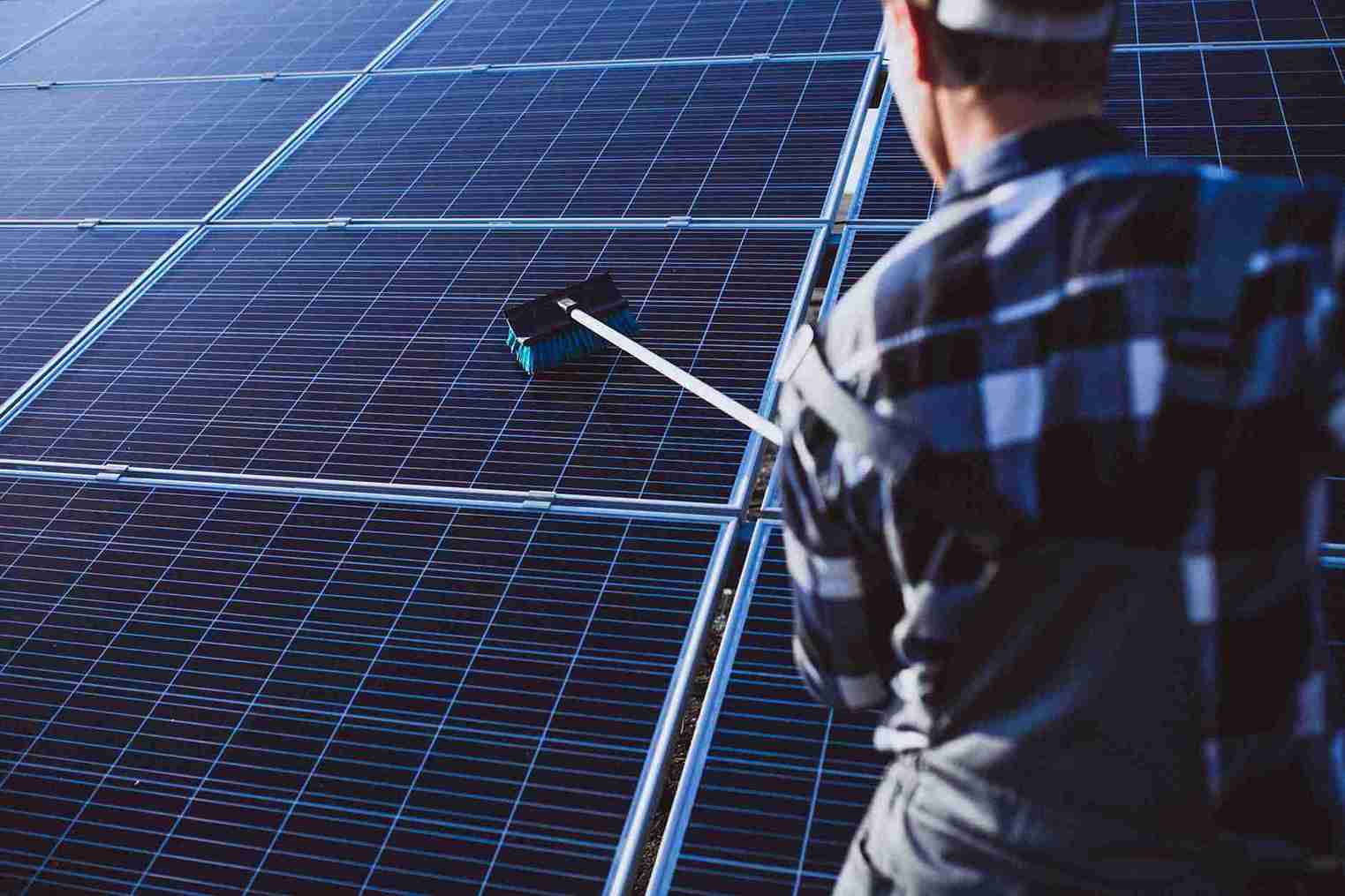
A rooftop solar system does not stay clean merely because it sits in open air. For homeowners and commercial property managers, solar panel cleaning in DHA is performance maintenance: dust, traffic residue, bird droppings, leaves, and fine particles can form a film that blocks light before it reaches the cells.
The useful question is not whether a panel looks dusty from ground level. It is whether surface dirt is reducing output enough to justify careful cleaning, and how to do that without scratching the glass, stressing the mounting system, or creating an electrical risk. This guide covers the signs, timing, method, and local decisions that matter for solar systems in DHA Lahore.
Why dirty panels produce less electricity
Solar-panel soiling is the build-up of dust, soot, pollen, bird droppings, and other material on the front glass of a photovoltaic module. It reduces output because photovoltaic cells need incoming light; a dirty glass surface blocks or scatters part of that light before it reaches the cells.
Even a faint grey film across the whole array affects every module, while a hardened bird-dropping patch can create concentrated shade. The National Laboratory of the Rockies reports that dust, soot, and particulates reduce PV efficiency and power production. It also notes that dew can help fine particles bind to glass, so a later rain may not fully remove them.
DHA has an unforgiving mix of conditions: open roads, construction activity in some phases, landscaped streets, dry spells, and heavy city traffic beyond the community boundaries. Punjab’s clean-air policy also records expanding smog and air-pollution concerns in Lahore, so fine urban residue is a real maintenance consideration. A villa beside an active plot, a school with a broad low-tilt roof, and a house beneath mature trees will not soil at the same rate.
Check inverter data over several clear days. A decline on similar sunny days, without a fault alert or new shade, makes inspection sensible. Heat, haze, seasonal sun angle, grid limits, and faults can also reduce production.
How often should DHA solar panels be cleaned?
Inspect most DHA systems monthly and clean them when surface condition or comparable production data supports it. For many homes, that means every two to four months, with extra attention after dry weather, construction, dust storms, or heavy bird activity.
That range is a decision rule, not a magic number. A 5 kW villa system with a clear, tilted roof may stay acceptably clean longer than a 30 kW commercial array installed almost flat. Low-tilt modules shed rainwater and debris less effectively.
Research on solar soiling shows that rainfall may remove some material without restoring panels to their prior clean performance. Fine residue, dried droppings, and bonded particles can stay behind, so rain is weather—not a cleaning schedule.
Use these triggers rather than washing blindly:
- A visible film, streaks, droppings, or leaf litter across several modules.
- A fall in comparable daily generation during clear weather.
- Construction dust, drilling debris, or cement-like deposits from nearby work.
- Water marks after a dusty shower, particularly along lower panel edges.
- Bird nests, overhanging branches, or AC exhaust close to the array.
For owners considering washing solar panels themselves, a monthly visual check from a safe access point is normally enough. Do not climb onto a fragile roof or step on modules. Glass is not a walkway.
What is the safest way to clean a solar array?
The safest method uses low-pressure water, a soft non-abrasive brush or microfiber tool, and minimal force. Solar panel glass is durable, but aggressive scrubbing, abrasive pads, harsh chemicals, and high-pressure jets can damage surfaces, seals, wiring, or roof finishes.
Start with system safety. Follow the inverter manufacturer’s shutdown procedure where cleaning requires close work around equipment, and never touch damaged cables, open junction boxes, or exposed connectors. Clean in the early morning or late afternoon, when glass is cooler.
A careful cleaning sequence has five steps:
- Inspect for cracked glass, loose clamps, damaged frames, nesting material, or exposed wiring.
- Lift off leaves and dry debris with a soft brush without dragging grit across the face.
- Rinse lightly with clean water before contact cleaning.
- Use straight, gentle passes and keep grime from being pushed into frame edges.
- Review inverter data over the next few clear days to see whether output returns to its usual pattern.
Low-mineral water is useful where tap water leaves noticeable deposits after drying. It avoids replacing dust with mineral spotting. A solar washing machine can suit a larger roof, but the operator still needs controlled water flow, soft tools, electrical clearance, and safe access. Bigger equipment does not rescue a sloppy process.
Why DIY cleaning sometimes creates bigger problems
DIY cleaning can work for a small, safely accessible system. It is a poor decision when the job requires climbing, leaning over parapets, working near live equipment, or carrying water across an uneven roof.
The mistakes are predictable. Some people use detergent that leaves a film, then wonder why the glass looks shiny but output stays weak. Others use household pressure washers, which can drive water into places it should never enter. Another classic move is cleaning only the visibly dirty modules, even though a light uniform film across the whole array may be the larger source of loss.
A competent solar cleaning company treats the visit as a brief maintenance inspection, not just a wet-brush routine. The work should check persistent stains, loose hardware, cable damage, blocked drainage, and new shade. It should also recognise when cleaning is not the answer. Weak output after cleaning can point to an inverter alert, string fault, damaged module, wiring issue, or grid limit.
The U.S. Department of Energy lists soiling alongside micro-cracking, corrosion, and other issues addressed through routine solar operations and maintenance. That is the correct mindset for DHA roofs: cleaning helps preserve performance and gives someone a chance to spot trouble before it becomes a repair bill.
How should DHA homeowners choose a cleaning method?
Choose the method by roof access, system size, soiling type, and water quality—not by the cheapest-looking option. A result that leaves mineral marks, scratches glass, or risks a fall is not a clean result. It is a fresh problem wearing a wet shirt.
A small home system may only need soft tools and clean water. Multi-storey houses, large villa arrays, and commercial roofs usually need trained access and controlled equipment. Flat or low-tilt systems deserve extra care because dirt collects near frames.
Ask questions before anyone gets onto the roof. What touches the panel? Is the water low pressure? How is hose drag prevented? Will they report cracks, loose clamps, cable concerns, or heavy residue? Do they review monitoring data? That filters out the guy whose entire quality-control process is “looks fine, boss.”
Most routine dust needs clean water and a soft tool, not a chemistry experiment. Persistent organic residue, oily pollution film, or cement dust may need a product compatible with module glass, frames, seals, and roof materials. Labels such as clean and green services do not prove a product is suitable; manufacturer compatibility information does.
AfinitySolar approaches solar panel cleaning in DHA as site-specific maintenance: the roof layout, access risks, local contamination, and monitoring data decide the method, not a one-size-fits-all package.
What should you track after a panel clean?
Track comparable production rather than one dramatic before-and-after screenshot. Solar generation changes with cloud cover, temperature, season, shading, and system faults, so a fair comparison needs several similar days.
Record the cleaning date, visible condition, weather, and daily kilowatt-hour output for three to seven clear days before and after work. Where an inverter app shows separate strings, flag unusual sections. This separates soiling from an electrical or shading problem.
Use five plain questions:
- Did generation improve on comparable clear days?
- Are any panels still visibly stained or unevenly dirty?
- Did the inverter show a warning or fault code?
- Has a tree, water tank, satellite dish, or neighbouring structure added shade?
- Are roof drains and panel gaps free of leaves and nesting material?
A phone note with photos from the same angle beats relying on memory. For commercial sites, one monthly log reveals whether cleaning is too slow, too frequent, or sensible.
FAQ: practical questions about panel cleaning in DHA
Can rain clean solar panels well enough?
Rain can remove loose dust, but it may not restore panels to a clean operating condition. Fine particles, dried residue, and droppings can remain, especially on low-tilt modules.
Can I use dish soap or glass cleaner?
Avoid household cleaners unless the panel manufacturer permits them. Residue can attract dirt or leave a film, while harsh chemicals may damage coatings, seals, frames, or roof finishes.
Does cleaning fix every production drop?
No. Cleaning fixes loss caused by surface soiling. A continuing decline can indicate shading, inverter trouble, faulty strings, damaged modules, wiring defects, or a monitoring error.
Is solar panel cleaning in DHA necessary during winter?
Yes, when inspection and comparable output show soiling. Winter haze, airborne pollution, bird activity, and dried residue do not disappear because the temperature falls. Follow panel condition and production data, not the calendar alone.
Solar panel cleaning in DHA works best as measured maintenance, not a random cosmetic chore. Inspect regularly, clean safely when the evidence supports it, and use production records to judge whether the work made a difference.
The objective is simple: keep light reaching the cells, avoid creating damage during cleaning, and notice roof-level faults before they chew into the value of the solar system.