
There is something genuinely satisfying about spotless glass — whether it is a mirror that reflects without haze, a window that looks invisible, or a glass table that feels freshly polished. Yet most people struggle to achieve that “just cleaned” clarity at home. The issue is rarely the cleaner itself; it is usually the method.
A well-formulated product like Fay glass cleaner is designed to cut through fingerprints, dust, and light grease while leaving minimal residue. But even the best formula will streak if it is applied incorrectly or wiped with the wrong technique. This guide refines your entire process so you can consistently achieve streak-free glass across your home.
Why Glass Gets Streaky (Even After Cleaning)
Streaks are not random — they come from predictable mistakes. Understanding them helps you avoid repeating them.
The most common reason is residue left behind. When cleaning liquid is not fully removed, it dries into visible lines or patches. Another major issue is overuse of product. Many people assume more spray equals cleaner glass, but excess liquid actually increases drying marks.
Timing also matters. Cleaning glass in direct sunlight causes the solution to evaporate too quickly, leaving dissolved dirt behind before it can be wiped away. In humid climates like Karachi, this problem becomes even more noticeable.
Finally, cloth choice plays a major role. The wrong fabric can reintroduce lint, oils, or moisture unevenly — creating streaks even after careful cleaning.
Choosing the Right Cloth: The Foundation of Clean Glass
If there is one step that determines your result more than anything else, it is the wiping material.
Paper towels, though convenient, often break apart and leave tiny fibers behind. Cotton cloths and old T-shirts may feel soft, but they tend to push dirt around rather than lift it off the surface.
The most reliable option is a clean microfibre cloth. Its ultra-fine fibers are engineered to trap dust, oil, and moisture without redistributing them. This is especially important when using modern glass cleaners like Fay Glass Cleaner, which are formulated for quick evaporation and low residue — but still rely on proper wiping technique.
A second dry microfibre cloth can also help for final buffing, especially on mirrors or large windows.
How to Apply Glass Cleaner the Right Way
Application is where most people unknowingly go wrong.
Instead of soaking the entire surface, use a light, even mist. One or two sprays per section is usually enough. Over-spraying creates unnecessary liquid buildup, which increases the risk of streaking.
Work in manageable sections, especially for large surfaces like sliding windows or wardrobe mirrors. Clean one portion completely before moving to the next. This prevents the product from drying prematurely.
With Fay glass cleaner, a thin layer is sufficient because the formula is designed to dissolve smudges quickly without heavy saturation.
The Correct Wiping Technique for a Crystal Finish
The way you move your hand across glass matters just as much as the cleaner itself.
Circular wiping is a common habit, but it tends to redistribute dirt in overlapping swirls. This is one of the main reasons people see “ghost marks” after cleaning.
A more effective method is straight-line wiping:
- Use horizontal strokes for wider surfaces
- Use vertical strokes for tall mirrors or panes
- Slightly overlap each pass to ensure full coverage
This structured approach ensures that every section is cleaned once and not repeatedly smeared.
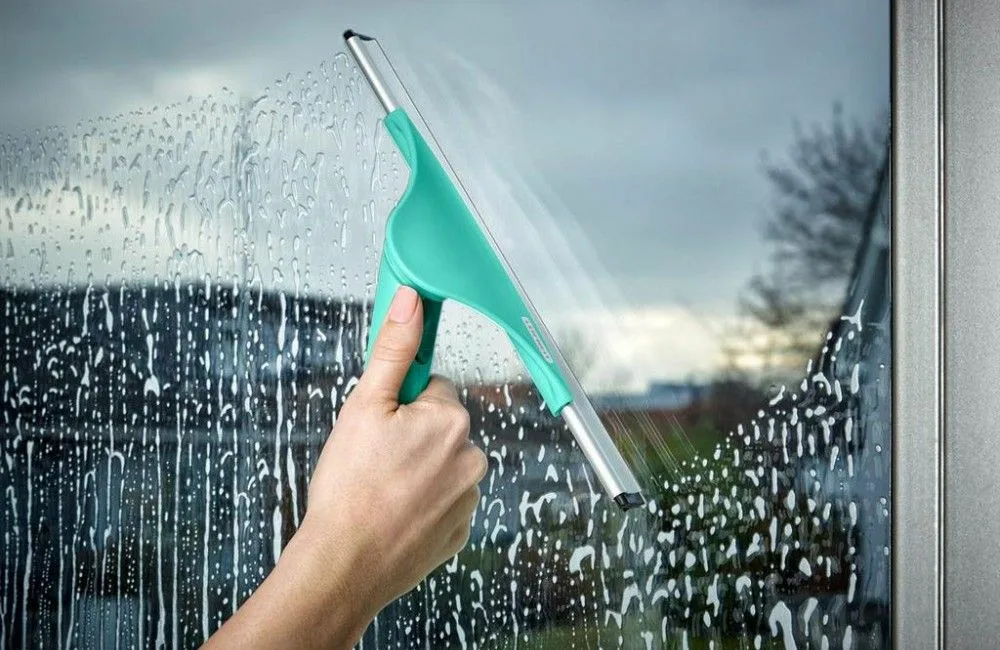
For larger windows, professionals often use an S-pattern with a squeegee. At home, microfibre cloths combined with straight strokes achieve a similar finish without special tools.
Timing Matters More Than People Realize
Glass cleaning is highly sensitive to heat and light.
Cleaning under direct sunlight is one of the biggest causes of streaks. The heat accelerates evaporation, meaning the cleaner dries before it can fully lift dirt from the surface.
The best times for cleaning in Karachi households are:
- Early morning before strong sunlight
- Late afternoon when heat intensity drops
- Cloudy or shaded conditions
This gives the cleaner enough “working time” to break down grime properly before wiping.
Where Glass Cleaner Works Best in the Home
A good glass cleaner is not limited to windows. A quality formula like Fay glass cleaner can safely be used on multiple smooth surfaces:
- Bathroom mirrors and vanity mirrors
- Glass dining tables
- Shower screens
- Glass cabinet doors
- Chrome bathroom fittings
- Stainless steel appliance surfaces (light cleaning)
These surfaces share a common trait: they are non-porous. That means dirt sits on top rather than absorbing into the material, making glass cleaner especially effective.
However, it should not be used on wood, painted walls, or rough stone surfaces, as these materials can absorb liquid or become damaged.
Building a Simple Cleaning Routine That Actually Works
Consistency is what keeps glass looking clean without effort.
Instead of waiting for heavy buildup, light routine cleaning is far more effective. In most households, this could look like:
- Weekly mirror and frequently touched surface cleaning
- Bi-weekly window and glass door maintenance
- Quick daily wipe of high-use mirrors (optional but effective)
When cleaning becomes routine, you use less product and spend less time per session.
Keeping a bottle of Fay glass cleaner in accessible areas like bathrooms or kitchen cabinets makes it easier to maintain this habit without delay.
Common Mistakes That Cause Streaks
Even with a good product, a few small habits can ruin results:
Using too much spray: More liquid means more drying residue.
Using dirty cloths: A reused cloth may already contain grease or dust.
Skipping edges and corners: Residue builds up and becomes visible over time.
Wiping too slowly in heat: Allows premature drying.
Correcting these small issues often improves results more than changing products.
Why Product Quality Still Matters
Technique is essential, but formulation still plays a role. Some glass cleaners leave behind a thin film that attracts dust again quickly. Others contain strong fragrances that can linger in enclosed spaces like bathrooms.
Fay developed its glass cleaner range with local conditions in mind — especially dust levels, humidity, and frequent indoor cooking environments. The goal is quick evaporation with minimal residue so that surfaces stay clear longer.
This is particularly useful in busy households where windows, mirrors, and glass furniture are used daily and require frequent touch-ups.
Availability in Pakistan
Naheed Supermarket and Nice Supermarket are among the retail outlets where Fay products are commonly available in Karachi. You can also explore product details directly through the official site: Fay Official Website
Final Thoughts
Streak-free glass is not about effort alone — it is about understanding how cleaning products behave on smooth surfaces. Once you combine the right cleaner, the right cloth, proper timing, and controlled application, the results become consistent rather than accidental.
With a reliable product like Fay glass cleaner, and a simple structured method, mirrors and windows stop being a frustrating chore and become one of the easiest parts of home maintenance.
Clean glass is ultimately about clarity — not just on the surface, but in the process you use to get there.