
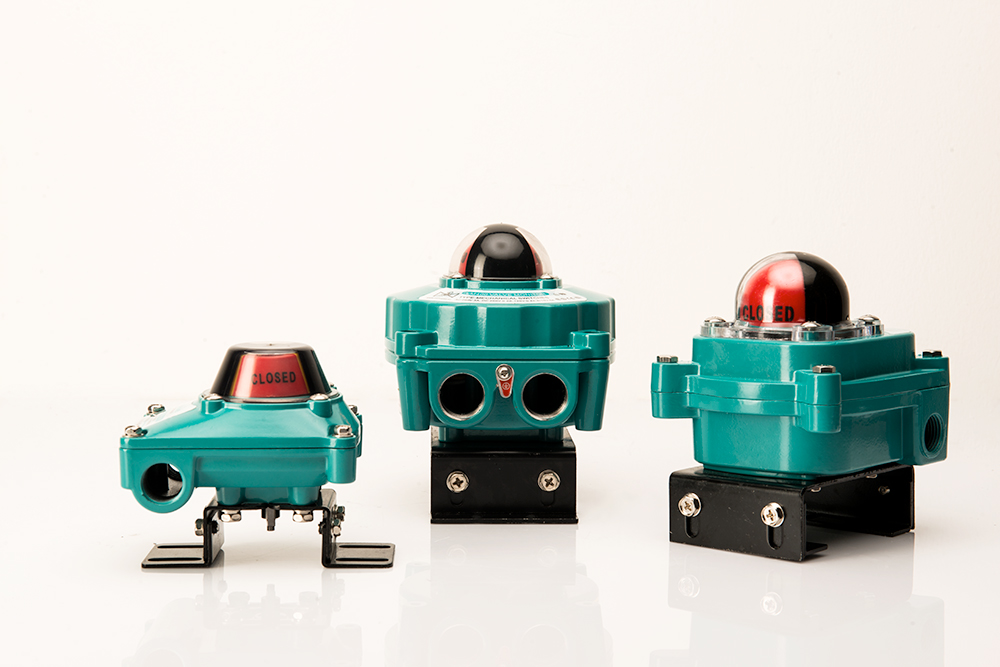
In industrial systems, knowing whether a valve is open, closed, or somewhere in between can be critical for safe and reliable operation. Operators often need this information from a distance, especially when valves are installed in pipelines, processing equipment, tanks, or difficult-to-access areas. A valve position indicator provides a practical way to identify valve position without relying entirely on guesswork or manually inspecting the valve.
Valve position becomes especially important when several valves perform similar functions. A technician may need to confirm that a line is isolated before maintenance or verify that a process valve has reached its intended operating position. A clear indication system reduces uncertainty and helps operators make better decisions during routine operation, troubleshooting, and emergency situations.
What Is a Valve Position Indicator?
A valve position indicator is a mechanical, electrical, or electronic device that shows the current position of a valve. Depending on the design, it may indicate a simple open or closed state or provide information about the valve’s intermediate position.
Many manually operated valves use a visual indicator attached to the stem or actuator. For example, a quarter-turn valve may have a handle that points in a direction corresponding to the flow path. Other industrial valves use dedicated indicators, switches, sensors, or transmitters.
The basic purpose remains the same: provide reliable information about valve position.
In automated systems, position information can also be sent to a control system. This allows operators to monitor valves from a control room rather than physically checking each one.
Why Position Indication Matters
Incorrect assumptions about valve position can cause operational problems. A valve believed to be closed may actually be partially open, while a valve expected to regulate flow may have moved beyond its intended position.
Position indication can help with:
- Process monitoring
- Equipment isolation
- Preventive maintenance
- Automated control
- Troubleshooting
- Safety procedures
- Remote operation
- Flow management
Consider a water treatment facility with multiple isolation valves. During maintenance, an operator may need confirmation that a particular pipeline section has been isolated. A reliable position indicator provides an additional visual or electrical confirmation before work begins.
Types of Valve Position Indicators
Different applications require different types of indication. Selecting the right design depends on the valve, environment, control system, and required accuracy.
Mechanical Indicators
Mechanical indicators are among the simplest solutions. They typically use a pointer, flag, dial, or stem position to show whether the valve is open or closed.
Their main advantages are simplicity and easy visual inspection. They do not necessarily require electrical power, making them useful in basic installations.
However, mechanical indicators may not be suitable when the valve is located far away or when operators need continuous monitoring from a control room.
Electrical Position Switches
Electrical switches provide a signal when a valve reaches a predetermined position. A limit switch, for example, can indicate when a valve has reached its fully open or fully closed position.
These devices are commonly used with automated valves. The signal can be integrated into alarms, control panels, or programmable logic controllers.
One limitation is that a basic switch may only confirm specific positions rather than provide continuous position information.
Position Transmitters
A position transmitter provides more detailed information. Instead of simply reporting open or closed, it can communicate the valve’s approximate position across its operating range.
For example, a control system might receive a signal corresponding to 0% closed, 50% open, or 100% open.
This is particularly useful for modulating valves where precise positioning affects pressure, temperature, flow, or other process conditions.
How to Select the Right Indicator
Choosing a position indicator should begin with understanding how the valve is operated and monitored.
Step 1: Identify the Valve Type
Start by determining whether the application uses a ball, butterfly, gate, globe, plug, or another valve design.
A quarter-turn valve may require a different indicator arrangement than a multi-turn valve. The valve’s stem movement and actuator configuration directly affect the appropriate indication method.
Step 2: Determine the Required Information
Ask whether the application requires simple open/closed confirmation or continuous position feedback.
For an isolation valve, open/closed indication may be sufficient. A control valve regulating process flow may require continuous feedback.
Step 3: Evaluate the Environment
Consider temperature, moisture, dust, chemicals, vibration, and outdoor exposure.
For example, an indicator installed outdoors near a chemical processing area may need a more robust enclosure than one installed inside a clean mechanical room.
Step 4: Check Compatibility
The indicator should be compatible with the valve actuator and control system. Mechanical dimensions, mounting arrangements, electrical characteristics, and communication requirements should all be checked before installation.
Step 5: Consider Maintenance
A position indicator should be easy to inspect and maintain. If technicians cannot access the device safely, even a technically suitable indicator can become impractical.
Common Mistakes and Challenges
One common mistake is treating an indicator as proof that the entire process condition is safe. Valve position and actual process conditions are not always identical.
For example, a valve can indicate closed while pressure remains trapped downstream. Similarly, a valve may indicate open while a blockage prevents expected flow.
Another issue is incorrect calibration. If an electrical indicator is installed without properly setting its open and closed limits, the control system may receive inaccurate information.
Poor labeling can also create confusion. When several valves are located together, indicators should clearly correspond to the correct valve and operating function.
Finally, operators sometimes overlook routine inspection. Dirt, corrosion, mechanical wear, loose mounting hardware, or damaged wiring can compromise position feedback over time.
Practical Tips for Reliable Valve Position Indication
A few straightforward practices can improve reliability.
Verify indicators during commissioning. Move the valve through its operating range and confirm that the displayed position matches the actual mechanical position.
Use clear labeling. Valve identification should be easy to understand from the normal operating location.
Inspect mechanical components. Check pointers, flags, mounting hardware, and moving parts for damage or looseness.
Test electrical feedback. For automated systems, verify that open, closed, and intermediate signals reach the control system correctly.
Document the setup. Record indicator type, calibration settings, wiring information, and valve identification. This makes future maintenance easier.
Do not rely on one indication method for critical isolation. Where safety procedures require positive isolation, follow the site’s established isolation and verification process rather than assuming that an indicator alone proves the system is depressurized.
Conclusion
A valve position indicator is a small component that can play an important role in industrial visibility and control. By clearly communicating valve status, it helps operators monitor processes, troubleshoot problems, perform maintenance, and manage automated equipment more effectively.
The best solution depends on the valve type, operating environment, required accuracy, and control architecture. Whether a simple mechanical pointer or an integrated electronic transmitter is appropriate, proper selection, installation, calibration, and inspection are essential.
Ultimately, reliable position indication is about more than knowing whether a valve is open or closed. It gives operators better information—and better information supports safer, more controlled industrial operations.